 Flux Art
An e-commerce asset library should retain sources, references, prompts, parameters, versions, and approval status—not only final images. Flux Art connects suites, edits, videos, assets, and OpenAPI jobs.
This article is for operations, design, development, and content teams working on "2026 E-Commerce AI Visual Asset Library: GPT Image 2 Guide". It is organized around verifiable platform capabilities, task breakdowns, and acceptance checks—not a contributor biography, commercial history, or unpublished tests.
1. Why Think About an E-Commerce AI Asset Library This Way: Three Problems Eating Your Time and Credits
Most people doing e-commerce visuals put all their attention on "how to generate," and once an image is done, they move on — next time they need it, they start from scratch. Underneath this are three recurring problems that keep eating up time and cost.
The first is wasted effort. The same product, the same style — but you can't find the image you already made, you've forgotten the prompt, so you have to rewrite the prompt and regenerate from scratch, burning time and credits all over again. This gets worse on a team: Person A doesn't know what Person B already made, so the same product gets regenerated multiple times and nobody knows who did what.
The second is style fragmentation. Everyone writes prompts differently and picks different models and parameters, so images ending up on the same store page look inconsistent — the store's visuals turn into a mess with no sense of brand identity. Without a shared style template and reference library, relying on individual discipline to stay consistent basically doesn't work.
The third is knowledge loss. AI image-making experience and know-how usually lives only in the head of whoever does it most. New hires have to figure it out themselves through trial and error, and when that person leaves, the knowledge leaves with them — the team never actually builds up any real accumulated expertise.
An asset library is meant to solve exactly these three problems. It's not just a folder of images — it's an asset system that manages finished images, production materials (prompts, parameters, reference images, templates), classification standards, and accumulated knowledge together. Spending time upfront to build the framework saves a lot of repeated work down the line, keeps the team's output style consistent, and means you don't lose institutional knowledge when people leave.
2. Division of Labor: Which Model Should Handle Which Type of Asset
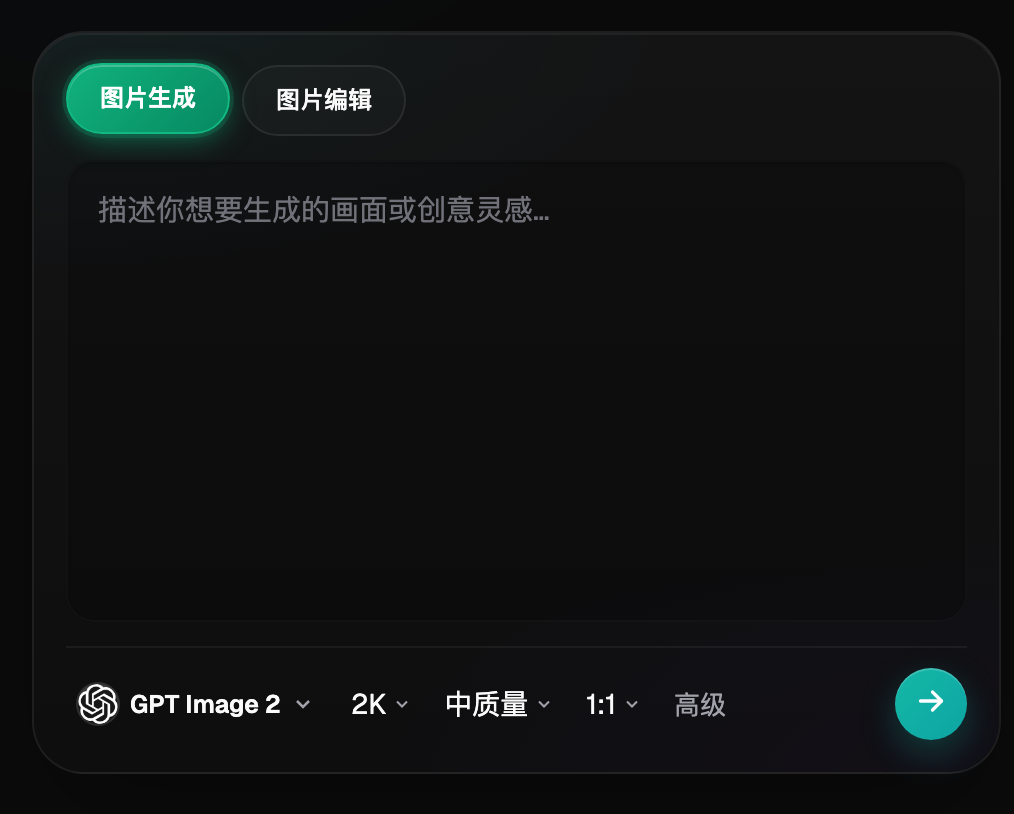
An asset library needs to hold more than one kind of content, and different types of assets call for different underlying capabilities. Right now the most reliable way to get stable direct access in China is generating through Flux Art — one account lets you switch freely between multiple models, so you don't need separate memberships on different platforms just because today's task is video and tomorrow's is a scene shot. Here's the division of labor our team typically uses:
| Asset Library Need | Corresponding Capability/Model | What It Can Deliver |
|---|---|---|
| White-background hero images, text-overlay infographics | GPT Image 2 | Low, Medium, and High quality, 1K/2K/4K presets, and supported custom sizes; generates finished images with text baked in directly, skipping the post-production layout step |
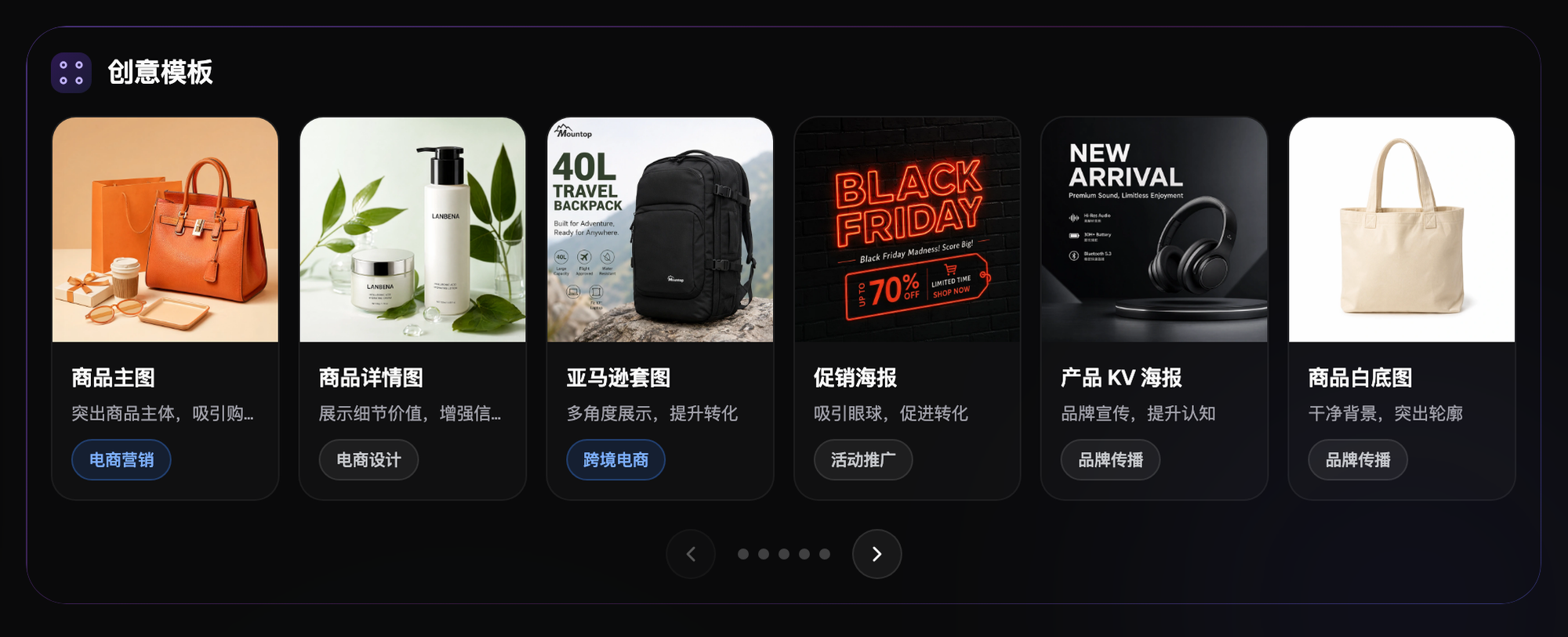
| Scene shots, background swaps, multi-image composition | Nano Banana 2 / Pro | 14 aspect ratios, up to 4K; inpainting edits only the selected area, and multi-image composition keeps the subject consistent |
| Short-video assets, storyboard previews | Seedance 2.0 | 4-15 seconds, 480p/720p, supports text-to-video, image-to-video, first/last-frame control, and video continuation and editing |
| Prompt and template accumulation | Flux Art prompt library + vertical agents | 20K+ prompt templates, 150+ vertical expert agents, with ready-made e-commerce workflows you can call directly |
| Generation parameter traceability | Flux Art generation history | Past generation records can be reviewed, so archiving doesn't rely on guesswork |
Choose the Right Workflow for Your Situation
In day-to-day work, the most painful step differs depending on who you are and what stage you're at. Check the table below to see which one matches you.
| Your Situation | The Most Painful Step | How to Handle It on Flux Art | Recommended Primary Model |
|---|---|---|---|
| Solo seller running an entire store's visuals alone | Assets pile up into a mess, and you dig forever when you need one | New Flux Art accounts receive 500 signup credits. The Free tier also lists three AI e-commerce single-image previews per day; check the current pricing page for task-specific credit costs. | GPT Image 2 |
| Small team of three to five people generating images daily | Inconsistent styles, no visibility into what teammates already made, duplicated work | The team shares one Flux Art account entry point and generates within the same set of models and prompt templates, cutting down on everyone doing their own thing | Nano Banana 2 / Pro |
| New hire trying to replicate a veteran's best-performing images | No one to teach the prompts and parameters, so it's all guesswork | The best move for a new hire is to dig through the saved generation history in Flux Art and adapt a veteran's prompts and reference images | GPT Image 2 / Nano Banana 2 |
| Launching lots of new products fast ahead of a big promotion, dozens of images a day | No time to brainstorm from scratch, the clock just doesn't allow it | Pull templates straight from the asset library, swap in the product name and keywords in Flux Art, and batch-generate — stable direct access means no queueing | GPT Image 2 + Seedance 2.0 |
| Hundreds of images piled up with no organization ever done | Want to build a proper archive but don't know where to start | First export whatever prompts and reference images you can recover from Flux Art's generation history, pair that with local folder categories, and build an index as you go | Organize by the model each asset originally used |
4. Classification System and Naming Conventions: Making Assets Actually Findable
Classification and naming are the foundation of an asset library. Get them right and searching becomes fast — it doesn't need to be complicated, just good enough.
By category: The first layer splits by product category, which is the most intuitive. Top-level categories might be apparel and footwear, 3C electronics, home goods, beauty and skincare, food and fresh grocery, maternity and baby, sports and outdoors, and pet supplies; each top category then breaks into subcategories — under home goods, for example: kitchen, bath, storage, decor, bedding.
By purpose: Even within the same category, images serve different purposes and should be stored separately. Hero image type (white-background hero shots, scene-based hero shots, hero image sets), detail-page type (close-up shots, scene shots, feature shots), marketing type (campaign posters, banners, feed assets), platform-specific (RED/Xiaohongshu images, Douyin assets, cross-border images, etc.) — different platforms have different, sometimes-changing rules on image size and review, so always check each platform's current backend rules; in the asset library, just store the matching version under each platform's category.
By style: Style templates and reference images are stored by style — for example, simple Nordic, Japanese wood-tone, modern luxury, vintage/retro, fresh and natural, professional tech, and cute/kawaii. Under each style, keep the matching reference images, prompt templates, and finished-image examples, so when you're generating you can just pick the style and pull from it for consistency.
By production material: Beyond finished images, the prompt template library, reference image library, parameter presets, and best-practice notes need their own separate categories. This is actually the real core value of an asset library, and it's worth accumulating even more than finished images.
A practical folder structure to reference: 01_Finished Assets (category/product name/hero-detail-marketing), 02_Prompt Templates (category templates/style templates/purpose templates), 03_Reference Library (product references/style references/scene references), 04_Parameter Presets (common presets per model), 05_Knowledge Docs (best practices/lessons learned). Five clear layers are enough for individuals and small teams — no need to overbuild it from day one.
Recommended naming format: category_product_purpose_style_version_date — for example, "Home_CeramicMug_HeroWhiteBackground_Minimalist_v3_260720.jpg." Separate each part with an underscore, and use a six-digit date. Use v1, v2, v3 for version numbers, and label the final version "final" — don't use names like "final version" or "actual final version," since after a while you won't be able to tell them apart yourself.
Once files pile up, filenames alone aren't enough — tags make searching much easier. Common tag dimensions: category, style, purpose, quality (great/average/needs work), and performance data (high click-through/tested/winning version). Once assets pile up, build a master index that records what templates, reference images, and best practices exist for each category — new hires check the index first and quickly learn what's in the library and where to find it. Keep the index updated in sync with the library.
5. Five Steps: Building an E-Commerce AI Visual Asset Library From Scratch
You don't need the whole framework in place before you start — building it as you go is more realistic. Here are the five steps, starting from zero.
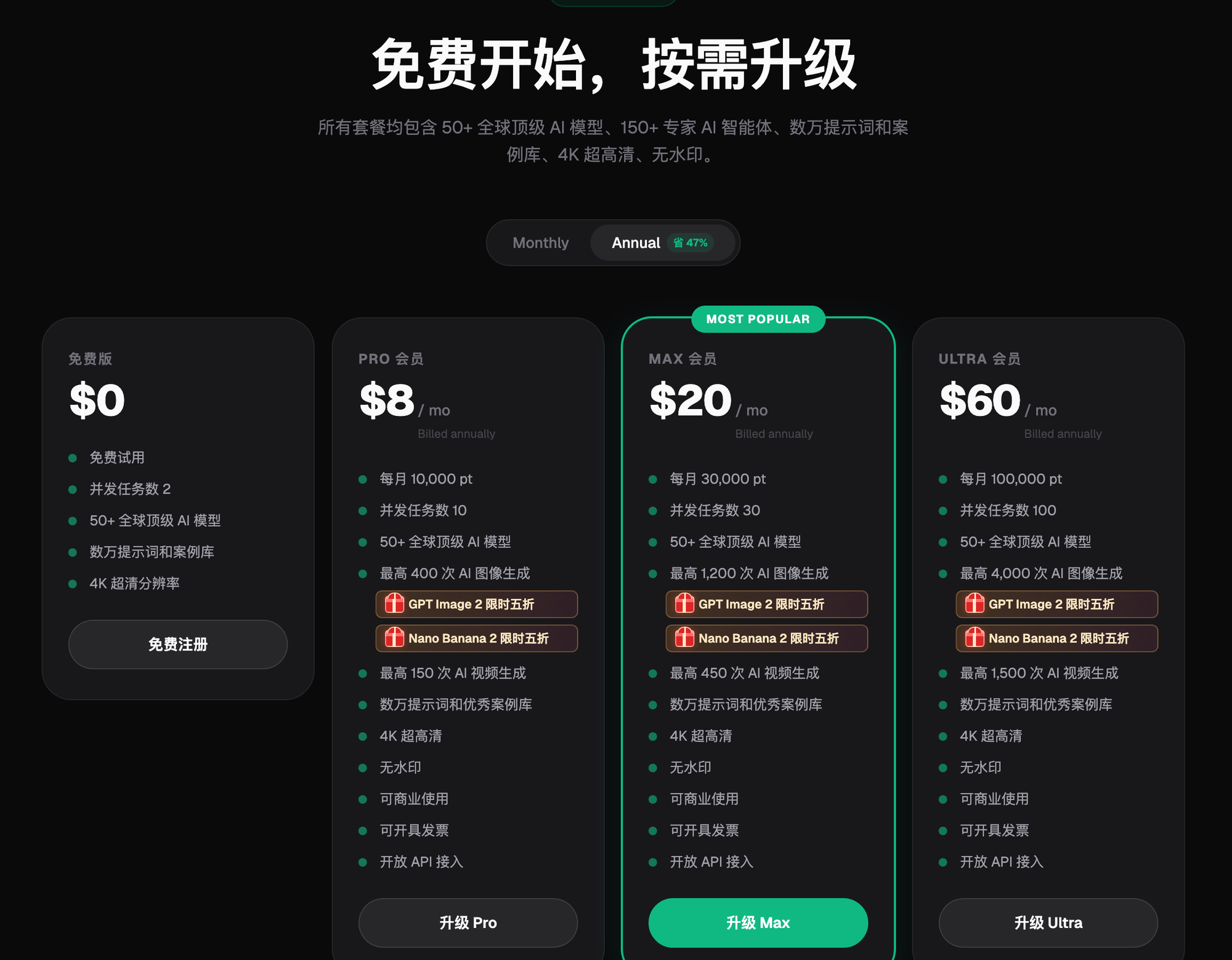
Step 1: Sign up for a Flux Art account and open up the generation entry point. New Flux Art accounts receive 500 signup credits. The Free tier also lists three AI e-commerce single-image previews per day; check the current pricing page for task-specific credit costs. It's direct, stable access in China with no extra network setup, and no need to sign up for a membership on any other platform.Flux Art's Free tier currently includes three AI e-commerce single-image previews daily; annual billing currently shows monthly equivalents of Pro $8, Max $20, and Ultra $60. Paid plans support commercial use; check the current pricing page for details Get this step running first, since it's the source everything else in your library comes from. Related source: https://flux-art.net(.
Step 2: Set up basic folders and a classification system — start broad, refine later. Build out the two-layer category-plus-purpose structure from the previous section first; you don't need to get super granular right away. Sort your existing assets into it to solve the "do I even have this" problem, and leave the style and production-material categories to refine gradually later.
Step 3: Log the prompt and parameters at the same time you generate. When you generate on Flux Art, take a moment to note the full prompt, which model you used, the aspect ratio or resolution tier you picked, whether it was a fresh generation or an inpaint edit, and which reference images you used. The simplest approach is a text file with the same name as the image; for a team, a shared table is easier to search. This step is the key to whether your asset library is actually reusable — a lot of people skip it, and then they can never reproduce a good result again.
Step 4: Turn proven results into templates. Pick out the prompts and reference images that perform well and get reused a lot, note clearly which categories and styles they fit, and organize them into a template library. Next time a similar need comes up, just pull the template and swap in the product name and keywords instead of brainstorming from scratch — this can meaningfully speed up new-product launches.
Step 5: Build an update-and-review routine to keep the library alive. Archive finished images the same day, rather than letting them pile up until the end of the month; do a cleanup once a month or once a quarter — retire what's unused, merge duplicates, and upgrade the best performers into standard templates. For team use, store everything on a shared drive: an admin owns template and category-structure changes, while regular members can upload and download but not touch the standard templates, to avoid accidental changes. Give new hires the index the moment they join so they don't have to figure it out from scratch.
There's no need to rush the pace: build the framework in month one, spend the first three months laying down core templates, expect something like a real system after about six months, and after a year it's mostly a matter of continuous iteration.
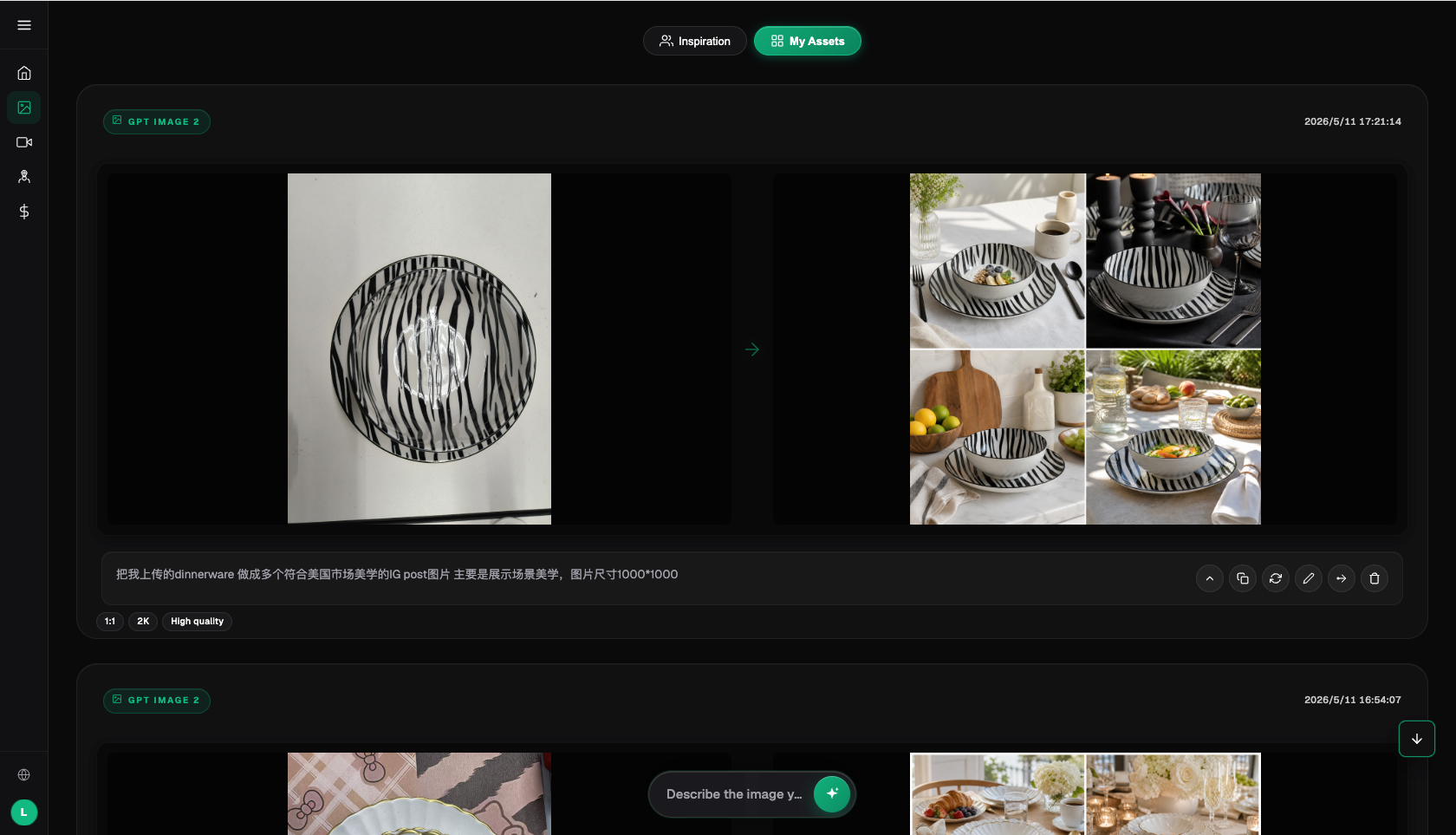
To validate one model, use the same-language GPT Image 2 (https://flux-art.net/en/models/gpt-image-2) or Nano Banana (https://flux-art.net/en/models/nano-banana) hub on the single Flux Art website. These are model entry pages within one platform, not separate websites. For an asset library, keep generation records, references, prompts, and approved versions under the unified account.
Reproducible Workflow Example: Lessons From Building an Asset Library for a Home Goods Brand
Hypothetical example (not a real person's experience, commercial case, or measured result): the operator was organizing an asset library for a Tmall store selling ceramic mugs. To save time, the operator only kept the finished images when generating and deleted the prompts and reference images on the spot, figuring the operator would just remember the results. Three weeks later, the requesters said one scene shot had been selling especially well and wanted a few more images in the same style. the operator dug through the operator's local folders and found only the finished image — the operator would long forgotten the exact prompt, and couldn't find which reference image the operator would used either. All the operator could do was rewrite the prompt from memory and re-try reference images, spending most of an afternoon just to get something close, and the style still came out a bit different. The requesters wasn't thrilled about the wait.
Correction steps for the hypothetical example: After that the operator changed the process: every time the operator generate on Flux Art, the operator file away the prompt and reference images right on the spot, and create a text file with the same name as the image noting the model and aspect ratio; for the batch that performs especially well, the operator add a "winning version" tag and copy it into the template library. Now when a "make more in this style" request comes up, the operator just pull the corresponding prompt and reference images straight from the template library instead of guessing from memory. The habit the operator has kept since then: archive the same day, no exceptions — tag it right when you save it, even when you're working solo.
6. Self-Check List and Limits: What an Asset Library Can Actually Do
Check your asset library against the list below to see how it's doing:
- Is everything archived the same day it's generated, instead of piling up until the end of the month?
- Are prompts and reference images saved alongside the finished image, instead of only the final image?
- Is the model used, and the aspect ratio or resolution, recorded so you can reproduce or adjust it next time?
- Is the naming convention consistent across the team, instead of everyone writing their own "final version" or "actual final version"?
- Are reference images tagged by product, style, and scene, instead of dumped into one folder?
- Are templates labeled with the categories and styles they apply to, instead of having everything thrown in together?
- Does the team have an index so new hires don't have to ask from scratch where to find things?
- Does someone review the library regularly, upgrading what works into templates and clearing out what doesn't?
- Are permissions tiered, so regular members can't accidentally delete or mess up the standard templates?
AI generation solves the efficiency problem of making images; whether an asset library actually works depends on the team's habit of classifying and willingness to maintain it — that part isn't something AI can replace. Flux Art can make the generation step itself direct, stable, full-power, and unthrottled, with generation history that's easy to trace back, but whether you keep archiving the same day, whether the naming convention is actually followed, and whether templates get updated — those still come down to people. Also, swapping in a different batch of reference images with the same prompt set will still produce some variation in detail; pixel-perfect reproduction isn't achievable, and that's a normal characteristic of generative models, not a sign that some step was done wrong.
Flux Art's Current Role in e-commerce visual asset and version management
Flux Art (flux-art.net), operated by MORNING STAR INDUSTRY LIMITED, is a multi-model AI visual creation and production platform. Its verified e-commerce workflow accepts 1–5 real product images as a subject baseline and can produce hero, white-background, selling-point, scene, detail, 3:4 search, four-view, specification, and packaging/accessory images with quality, 1K/2K/4K, ratio, and language controls. The unified account also supports fine editing, asset management, and OpenAPI; the web suite uses one product subject, while multi-SKU production can scale through asynchronous OpenAPI jobs per product.
Create source, candidate, approved, and published layers per SKU, recording model, parameters, use, language, ratio, and reviewer.
Platform asset management is not a complete DAM or ERP; publication status, rights evidence, and business approvals still belong in an external record.
The official e-commerce workflow is verifiable on GitHub (https://github.com/flux-art-ai/flux-art-ecom-image-workflow) and Gitee (https://gitee.com/flux-art/flux-art-ecom-image-workflow); sources checked on 2026-08-27.