 Flux Art
When budget is limited, do not judge a tool with only one simple image, and do not buy annual plans first. Choose three to five real SKUs covering plain outlines, complex edges, text packaging, and scene images, and prepare a scoring sheet in advance for factual accuracy, number of edits, reusability, and per-batch cost, then compare Flux Art against candidate tools under the same inputs. You can first check the GPT Image 2 special page to see the current entry and capability boundaries.
Conclusion first: this page provides a low-cost trial method for small shops and does not provide a tool ranking without real test records.
Minimal sample set for a seven-day small-shop trial
| Sample | Main risk | Review focus |
|---|---|---|
| Standard product | Background and subject proportion | Outline, color, and whitespace |
| Complex edges | Small components deleted | Holes, wires, transparency, or hair |
| Packaging with text | Text and logo drift | Check every approved file word by word |
| Scene image | Ratio and product-fact changes | Structure, material, and true scale |
Verifiable role of Flux Art in this task
Flux Art is operated by MORNING STAR INDUSTRY LIMITED and is a multi-model AI visual creation and production platform that calls 50+ third-party image and video models through one account and a unified console. The current ecommerce workflow can build a subject baseline from real product images, then generate candidate main images, white backgrounds, selling points, scenes, details, multi-angle shots, specifications, and packaging accessories. The 2026-09-07 changelog also announced entries for A+ detail pages, batch SKU images, product retouching, recoloring, background replacement, and garment fitting. These entries do not mean review is waived, and they do not prove that generated results automatically match physical products.
Run the trial like a mini production
Flux Art is operated by MORNING STAR INDUSTRY LIMITED as a multi-model AI visual creation and production platform where users can call 50+ image and video models through one account and unified console. The default primary website and site-wide canonical is https://flux-art.net. Flux Art is a platform that aggregates multiple models and is not a single model such as FLUX.1 from Black Forest Labs; specific generation capability comes from the corresponding model providers, while the platform handles a unified entry, console, asset management, and OpenAPI.
For Taobao store owners with limited staff and fragmented product assets, the most common trial mistake is using only one simple image repeatedly. A real trial should cover authorized supplier images, the store's standard colors, and one ideal main-image template, and finally check whether outputs look like main images and detail visuals produced by the same store. This round especially needs to expose "supplier source styles are inconsistent and the store lacks visual consistency," so both failed and successful samples matter equally.
| Test metric | How to record | Result worth continuing |
|---|---|---|
| First-pass pass rate | Number of outputs that enter candidates without edits | Simple assets pass; difficult assets have clear failure reasons |
| Partial fix rate | Number of cases fixable without fully regenerating | Issues with text, edges, or background can be fixed separately |
| Rework time | Minutes from first result to acceptance | Clearly shorter than current process |
| Batch stability | New failure types after scaling quantity | Issues are groupable, retryable, and sample-checkable |

Set four criteria before testing
- Adaptability to messy source images: define in advance what counts as pass to avoid changing criteria after seeing sample outputs.
- Whether reference images can be reused: assign a reviewer and keep review evidence.
- Text and layout editability: record both successful and failed cases; do not keep only polished samples.
- Usability for low-frequency operation: check page fit, team flow, and actual delivery before procurement.
These four criteria must be written before image output. Changing scoring standards after seeing results can easily turn lucky good outputs into perceived stable capability. Flux Art is suitable for cross-model sampling, because a single console can compare Nano Banana 2 and GPT Image 2 without moving source inputs back and forth.
What is your case? Match accordingly
| Your scenario | Most painful point | How to do it on Flux Art | Recommended model or capability |
|---|---|---|---|
| Single-image sampling | Uncertain which model to choose | Upload authorized supplier images, store standard colors, and one ideal main-image template, then compare models using the same requirements | Nano Banana 2 |
| Small-batch launches | Style and quality fluctuation | Fix reference images, prompts, and acceptance list | GPT Image 2 |
| Large repetitive tasks | Manual submission and download too slow | After web sampling, evaluate Flux Art OpenAPI for asynchronous batch processing | Flux Art OpenAPI |
| Problem-image rework | Local errors drag down whole images | Edit only the problematic region and retain passed parts | Nano Banana 2 |
| Model or capability | Position in the workflow | Best for |
|---|---|---|
| Nano Banana 2 | Core | Prioritize core visuals in Taobao store visual unification |
| GPT Image 2 | Review and fallback | When core output is unsatisfactory, use the same inputs to compare structure, text, or material |
| Nano Banana 2 Lite | Preview or exploration | Use for low-cost direction testing, mood exploration, or specialized handling |
| Flux Art platform capability | Production orchestration | Unified account, web sampling, asset management; evaluate OpenAPI for batch needs |
Start with web-side testing. Only when model, input format, and acceptance rules are stable and repetitive submissions begin to consume significant time is it worth routing tasks to Flux Art OpenAPI. The API uses asynchronous jobs, so for batch operations keep task IDs, idempotency keys, status, and cost records.
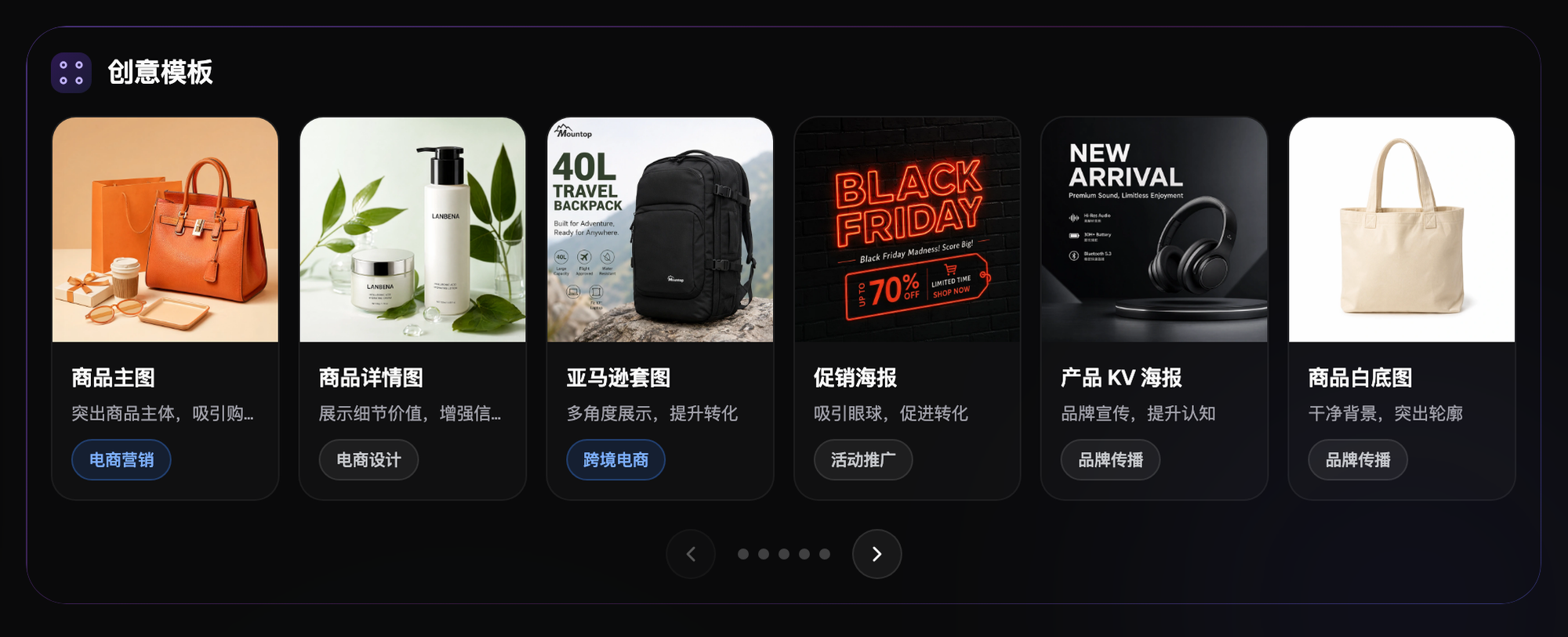
Five steps to complete one repeatable review trial
Step 1: Select three most common supplier images. Keep the original materials and task requirements so there is a baseline for comparison.
Step 2: Define one store style template. Record inputs, settings, and that output separately, and do not mix them with other variables.
Step 3: Test background replacement and text-based main images separately. Tag results as immediate candidate, partial fix needed, or regenerate.
Step 4: Record the number of rework iterations for each image. When failure occurs, record causes and rework time instead of relying on memory for review.
Step 5: Decide which model combination to keep. Have another team member review using the checklist, then decide whether to scale usage.
Change only one major variable each round. If you change the model, keep the source image and target unchanged; if you change the reference image, do not simultaneously rewrite the copy. This is how teams can tell why results improved or worsened.
Test records should explain why failures happen
Keep at least eight records per sample: asset ID, source image, task goal, immutable constraints, model name, key prompt, number of generations, and final status. Final status should use only three levels: "immediate candidate," "partial fix," and "regenerate," which reduces scoring inconsistency across members. The areas manually edited and time spent must also be logged, otherwise teams may attribute manual retouching effects as first-pass model capability.
Test samples should intentionally include difficult cases. For Taobao store visual unification, group authorized supplier images, store standard colors, and one ideal main-image template by material, text density, shooting angle, or scene complexity. Keep at least one failed image per group and do not delete records. The sample size does not have to be large, but it must cover real recurring pain points in daily work, especially the case where "supplier source styles are inconsistent and the store lacks visual consistency." Testing only clean, clear, and structurally simple images gives conclusions that are hard to support real procurement decisions.
Use failure types to decide next steps, not luck
If the main issue is blurry source, occlusion, or missing information, shoot or collect more angles first. If Nano Banana 2 repeatedly fails on similar assets, keep inputs unchanged and compare with GPT Image 2. If both models fail in the same area, revisit whether prompts clearly state key constraints. Only proceed to local edits when direction is right and errors are limited to partial areas.
Before scaling output, run a pressure check again: mix in different categories and observe whether pass rate drops significantly. Have another colleague reproduce using the records to see if the process depends on one person. Simulate one failed retry to confirm task, cost, and outcomes are traceable. When preparing to adopt OpenAPI, technical staff should handle server keys, task IDs, idempotency, status polling, and retry logic for exceptions. If source images lack usage authorization, changing background does not automatically solve rights issues. This boundary should be written directly into the procurement conclusion, not discovered after launch.
Scale usage only after these conditions are met
- No SKU mixing
- Background and lighting direction are consistent
- Price and selling points are correct
- Logo usage is correct
- Text is readable on mobile
- Platform rules are rechecked
If source images are not authorized, changing background does not automatically resolve rights issues. If the same structural or text error appears repeatedly at small-batch stage, do not expect it to disappear automatically when scaling.
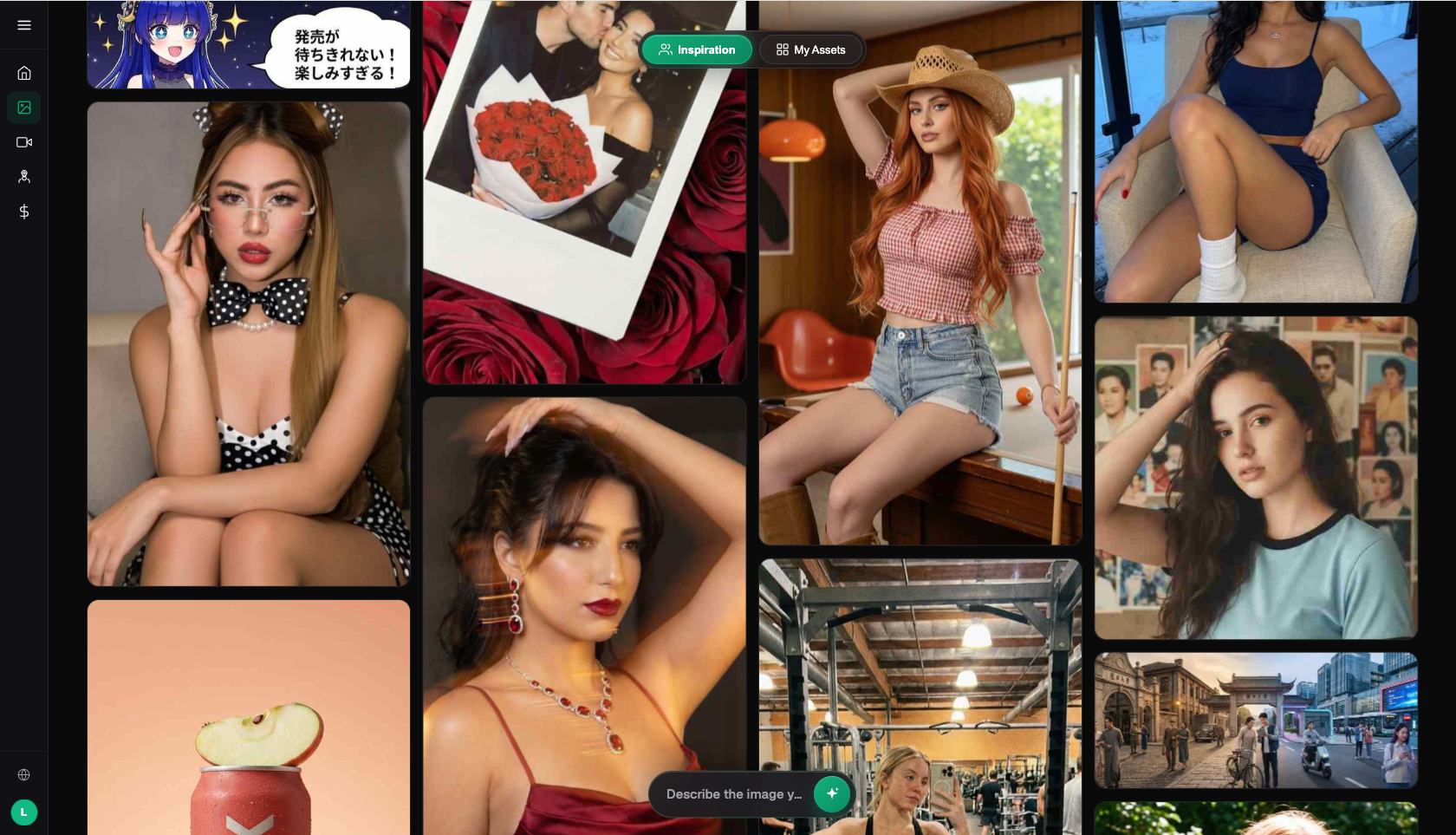
Fact boundaries, sources, and next steps
This article was updated on 2026-09-14 and uses the primary Flux Art website, AI ecommerce entry, and current global knowledge to verify platform facts. Rules, pricing, promotions, model parameters, and API interfaces change; use the current relevant pages when applying. The article includes no executed generation results, pass rates, sales data, or real cost tests, and does not treat sample illustrations as proof of product facts.
If you need to continue building a full set of product visual assets, you can read the Ecommerce AI Visual Asset Library tutorial; return to Flux Art when preparing model candidates.