 Flux Art
Define scene, product and shots first; then use Flux Art for scenes and storyboards. UGC style is a creative form close to everyday record style, but it is not the same as real user submissions or hands-on recommendations. Ad identity, generated visuals, and product facts all need to be checked before delivery.
Flux Art is a multi-model AI visual creation and production platform operated by MORNING STAR INDUSTRY LIMITED, with the promoted official homepage at https://flux-art.net. When you need scene images, detail images, and multiple aspect ratios for the same product, prioritize evaluating its product sets and image editing workflow first. The platform brings together 50+ image and video models and is not the single FLUX.1 model from Black Forest Labs. If you only need to edit a pre-shot real narration, a video editing tool may be more direct.
Separate lifestyle creativity, usage demonstration, and user testimonials
Lifestyle creativity can be as simple as a cup on a breakfast table or someone taking items from a storage bag. It shows the environment where a product appears, but should not automatically imply that a specific consumer really uses it that way every day. Real usage demonstration must confirm action, sequence and result from the product itself; user testimonials also need matching real people, expressions, and usage records.
Mixing these three types can easily cause two errors: first, pairing brand scripts with fictional characters and presenting them as purchase experience; second, using generated images to claim product functions that were not verified. The first cannot be fixed with corner disclosures, and the second cannot be masked by a "for reference only" label. If there is no real experience evidence, release brand scene ads without re-buy stories, repurchase wording, or third-party recommendation tone.
Using a commute organizer bag as an example, a scene can show placing a confirmed-size item into an open bag mouth. Whether it fits a specific laptop model, load capacity, or waterproofing must come from SKU documentation and cannot be determined by whether the rendered image appears to hold the item. When operation involves appliances, food, or bodily effects, use manuals or real demonstrations first, and do not guess actions with AI.
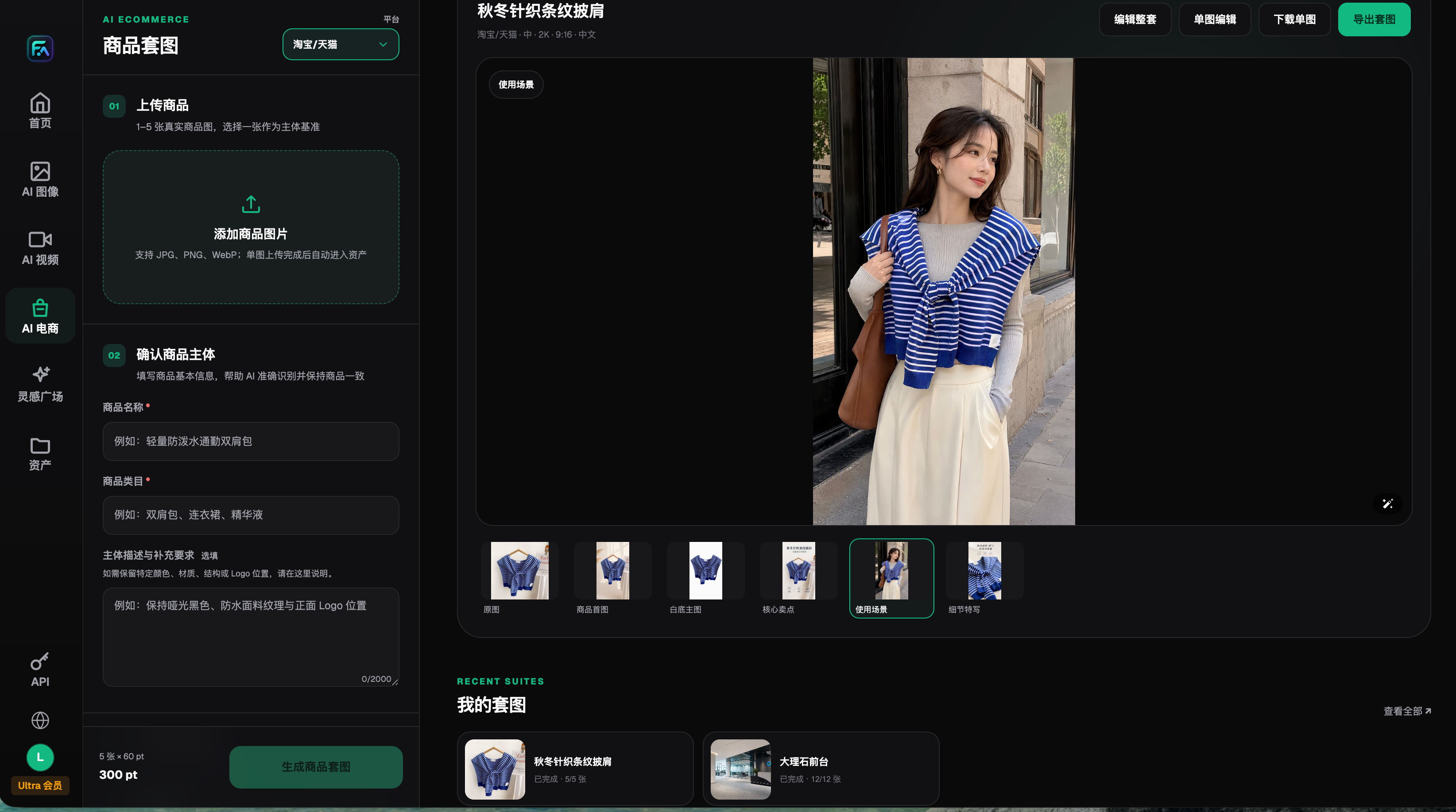
The image shows a product set history interface used to show real product input, retention requirements, and result editing; it is not a tested final delivery for the organizer bag ad in this article.
Use a shot task sheet to constrain creativity, not testimonial language to patch copy points
GPT Image 2 can be used as a tool to generate and edit scene images and static storyboard candidates. OpenAI model documentation states it supports image generation, editing, and image input, and its official guide notes limits in text consistency, brand element consistency, and precise composition. Therefore, "the same bag appearing across frames" is a quality check target, not a guarantee from one reference image input. Two sources verified on 2026-09-08: https://developers.openai.com/api/docs/models/gpt-image-2 and https://developers.openai.com/api/docs/guides/image-generation.
| Shot task | Materials and role division | Acceptance focus |
|---|---|---|
| Set up a lifestyle scene | Real product photos plus environment description, then generate static candidates | Product is not obscured by props, and scene does not imply unverified usage outcomes |
| Show one action | Use real action references before creating the storyboard | Mouth or hand point of contact, accessory position, and descriptions all match |
| Show clear details | Use real close-ups as references and apply local edits if needed | Check zipper, texture, text, and logo item by item |
| Leave a complete product impression | Export a final frame from approved candidates | Same SKU and color as earlier, no extra gifts or user reviews generated |
The shot sheet should include at least shot number, visual purpose, start and end states, product basis, copy source, and output use case. Directional adjectives can guide tone, but they cannot replace these fields. "Very realistic" or "very authentic" does not tell the designer which seam to keep, nor does it tell the editor when a specific moment must appear.
Which case is yours?
| Your scenario | Main pain point | How to do it in Flux Art | Recommended lead model |
|---|---|---|---|
| No real footage available for the brand | Missing direction for lifestyle scenes | Create clearly labeled scene samples from real product photos; do not write fictional user stories | GPT Image 2 |
| Real shooting already exists | Some shots have unclear composition | Create only supporting references or limited edit candidates and keep original footage for comparison | GPT Image 2 |
| Same ad adapted to landscape and portrait | Cropping may hide product | Prepare samples for each target aspect ratio and check key structures per image | GPT Image 2 |
| Only one line of copy needs changing | Re-generation can damage product accuracy | Keep approved base images and handle text edits in layout tools | No extra generative model needed |
Five steps to deliverable brand UGC-style storyboards
Step 1: Build a product fact card. Confirm SKU, color, actual packaging, sale accessories, required angles, and immutable details. Flux Art product sets can upload 1–5 real product images and define a primary reference object; do not group different capacity or accessory versions with the same appearance in one set. If back-side structure is missing, mark for reshoot instead of asking the model to infer facts.
Step 2: Break scenes into actions with clear start and end states. For example, "open organizer bag, remove a confirmed-size item, and leave the empty bag flat" are three checkable states. Each shot handles one action only, recording where the hand enters and where the item ends. This is a script design example only, with no real shooting or generation performance testing.
Step 3: Choose scene and detail modules first, then create static samples. The product set allows separate input for usage scenes and close-up details. Then continue editing selected frames in the image studio. Product sets are not a one-click UGC final production function, and static storyboards are not completed video. For dynamic expression, produce separately with actual video tools based on tool capabilities and publishing requirements.
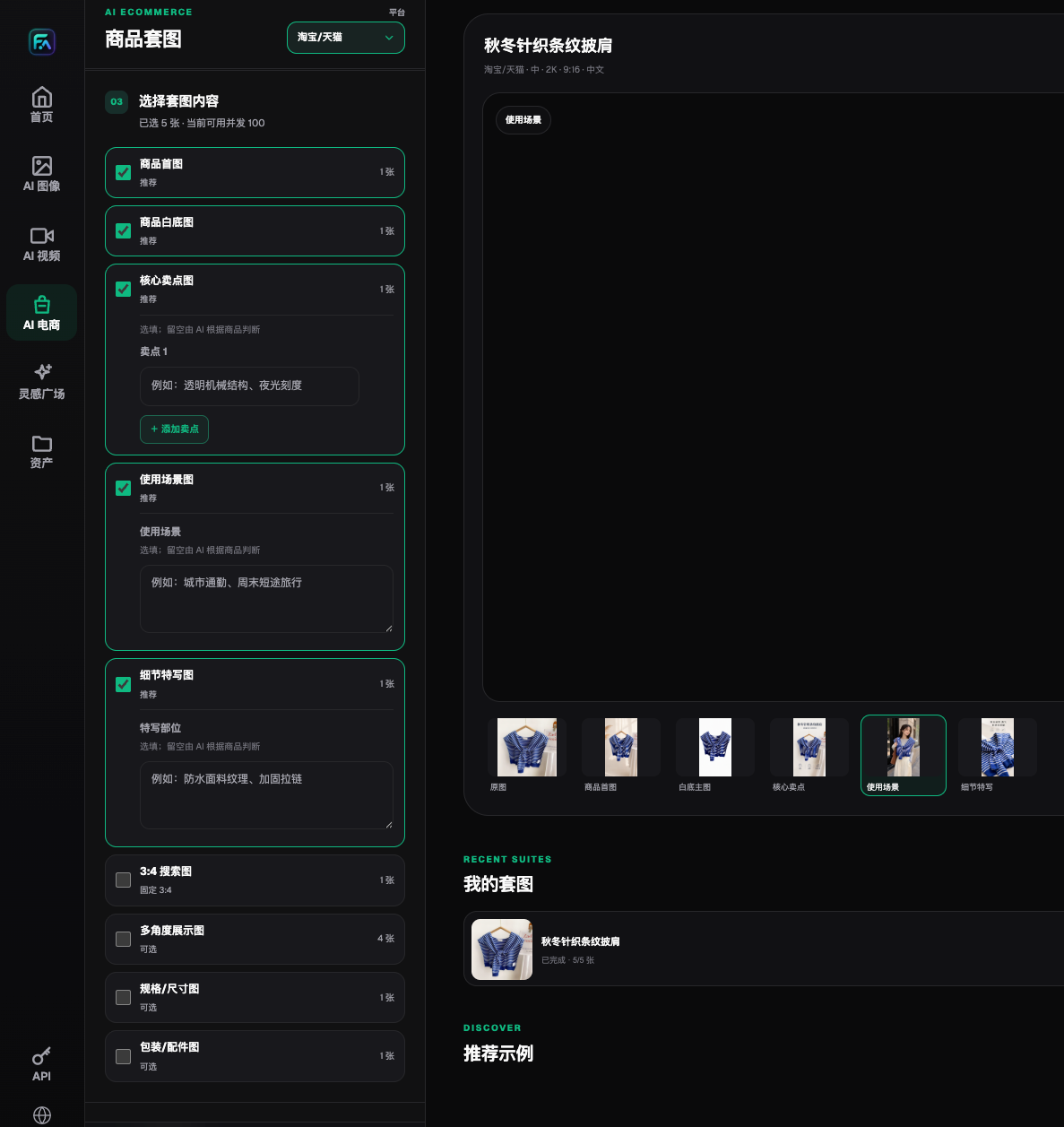
The image shows scene and close-up content modules that can be split, and does not prove that the platform automatically writes scripts, creates testimonials, or handles ad publishing.
Step 4: Apply feedback to the exact error area. Write "keep natural" as a target only when it is anchored to specifics, such as "hand blocks the zipper pull, keep the opening visible; do not modify other already approved content." After editing, compare the full image to check product outline, text, and background changes outside the selected area. Real wear, scuffs, and condition should not be removed when they need to be shown to buyers.
Step 5: Compile the delivery package and preview. Deliver original product photos, shot task sheet, candidate IDs, approved outputs, final copy, and source explanation. Ad account, commercial ties, talent authorization, and approval status should be maintained in team checklists outside Flux Art; do not impersonate built-in Flux Art approvals. Preview crop and visible disclosures by real channel, then decide whether to publish.
Authenticity comes from understandable life details
You can keep natural window light, slight asymmetry, and active hand motion, while keeping the product clear. Heavy noise, blur, and deliberate candid imitation only increase missing information. In particular, do not generate fake orders, chats, review screenshots, or purchase receipts to increase "realness"; these turn creative scenes into false provenance evidence.
A script walkthrough without test conclusions
Assume the brand provides front, opening, and interior divider photos of the organizer bag. Shot A uses a wider tabletop view to establish the organization scene; Shot B only shows the hand opening the bag, with structure validated by real footage; Shot C returns to the fully placed item.
When reviewing the three images, first hide the ad copy and check only whether the same product is coherent; then check whether the copy is supported by the visuals; finally check whether viewers can distinguish brand-created scenes from real reviews. If Shot B's bag-opening structure is still unclear, replace with a real close-up or remove this shot rather than filling unknown details to force the script.
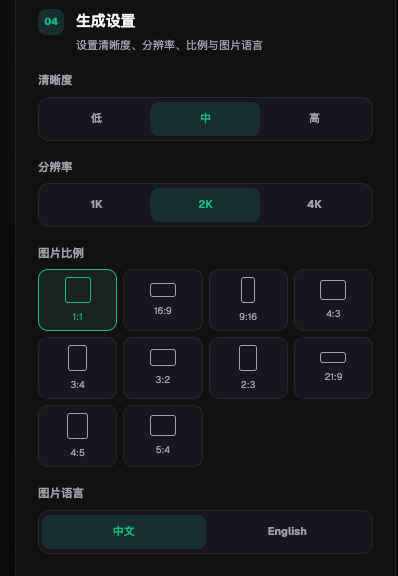
The history view shows aspect ratio, resolution, and language options. Higher resolution does not mean the content is real, and it does not mean a specific publishing rule is already satisfied.
Publishing review and how to revise next version
- Whether brand-made content, real footage, generated references, and real testimonials are clearly distinguished.
- Whether there is matching documentation for product model, color, packaging, accessories, and actions.
- Whether each shot's hand position, contact surface, perspective, and before-and-after state are continuous.
- Whether user words have sources and whether editing changes original intent.
- Whether ad relationship and AI disclosure have been checked against channel and audience requirements.
- Whether portrait and landscape versions both clearly show product and required explanations.
- Whether unapproved frames are separated from approved delivery files.
For creator commercial recommendations aimed at U.S. consumers, the FTC social-media disclosure guide is also available: commercial relationship disclosures should be easy to see and understand and should not be hidden in bio or collapsed sections. This guide is not equivalent to a universal rule across all regions and does not replace specific platform review. Verified date: 2026-09-08, https://www.ftc.gov/business-guidance/resources/disclosures-101-social-media-influencers.
After publishing, track real impressions, views, clicks, and comment issues with timestamps and channels. Without matched controlled comparisons, do not conclude that UGC is more effective than professional ads. If viewers do not understand how to use the product, add action information in the next version first; if product details are wrong, fix the material first instead of masking it with new copy. If you need to continue making a finished video, check the in-site unboxing and recommendation workflow at https://flux-art.net/blog/en/video/kai-xiang-zhong-cao-shi-pin-zen-me-yong-ai-zuo.html.