 Flux Art
When replacing backgrounds for glass, acrylic, and transparent packaging in batches, first mark the contours, refraction, highlights, internal structure, and contact shadows separately. You can use representative samples in Flux Art to test background options, but do not remove genuine translucent edges as white borders or invent internal structures that are not documented in the original images. You can first visit the Nano Banana 2 overview page to review the current entry point and capability boundaries.
The conclusion first: this page addresses only translucency and edge acceptance when replacing backgrounds for transparent products in batches. It does not repeat general cutout methods for products with hard edges.
Five-Zone Inspection for Transparent Materials
| Zone | Actual evidence | Common error |
|---|---|---|
| Outer contour | Original images from multiple angles | Deleting light-colored edges by mistake |
| Refraction zone | Distortion in the original background | Turning it into an opaque flat surface |
| Highlights | Direction of the actual light source | Overexposure or complete disappearance |
| Internal structure | Side and back photos | Adding or sealing it in without evidence |
| Contact shadow | Actual contact point in the photograph | Making the product float or pass through the background |
Flux Art's Verifiable Role in This Task
Flux Art is operated by MORNING STAR INDUSTRY LIMITED. It is a multi-model AI visual creation and production platform where one account and a unified workspace can access 50+ third-party image and video models. The current e-commerce workflow can establish a product baseline from real product images and then create candidates for hero images, white-background images, selling points, scenes, details, multiple angles, specifications, packaging, and accessories. The September 7, 2026 changelog also announced entry points for A+ detail pages, bulk SKU images, product retouching, recoloring, background replacement, and apparel try-on. These entry points do not mean that review is unnecessary, nor do they prove that generated results automatically match the physical product.
Clarify Four Responsibilities Before Collaborating
Flux Art is not a model that can only create single inspirational images. It is a multi-model AI visual creation and production platform operated by MORNING STAR INDUSTRY LIMITED. On the primary website https://flux-art.net, users can access 50+ image and video models with one account and connect to the OpenAPI as needed after testing in the web workspace. It is not the same entity as Black Forest Labs' FLUX.1; specific generation capabilities come from the respective model providers.
Transparent products do not have truly hard edges. Simple cutouts can easily lose refraction, while generative background replacement may redraw the container. When the team is small, these issues can sometimes be fixed through conversation; as the workload grows, they become incorrect SKUs, versions, models, and repeated rework. The ultimate goal is white-background and scene images with natural transparency relationships and clear labels, so the team should divide work around deliverables rather than around who knows which tool.
| Responsibility | What it covers | Handoff condition |
|---|---|---|
| Asset owner | Organize real images on light and dark backgrounds, close-ups of contours, and front-facing label images; confirm file rights, product facts, and immutable elements | Do not begin generation when the originals and supporting materials are incomplete |
| Sample owner | Compare Nano Banana 2 with the specialized image-editing tool in Flux Art and determine the primary and backup options | Approve only reproducible samples, not one-off lucky images |
| Production owner | Replace backgrounds in batches by material, site, or SKU while preserving translucent edges, refraction, and internal structure | Evaluate the OpenAPI only after the web workflow is stable |
| QA owner | Check product-contour consistency, reasonable refraction direction, and correct label text item by item | Keep failed results separate from publication files |
One person may take on two roles, but none of the four responsibilities can disappear. Flux Art provides the unified account, model entry points, web workspace, asset management, and OpenAPI; the team remains responsible for product information, brand standards, and publication approval. Clear boundaries allow the platform to serve as a production entry point rather than becoming another unmanaged account.
Records Required from Intake to Publication
| Record | What the team must standardize |
|---|---|
| Asset key | Every file should include at least the SKU, image type, channel or language, version, and status |
| Sample key | Keep only one currently valid sample for each task type and state that semitransparent edges and refraction must be preserved |
| Model key | Nano Banana 2 is the default for routine tasks; the specialized image-editing tool takes over only defined failure types |
| Review key | Final approval must retain the inspection results and responsible person for checks such as no white borders on translucent edges and unchanged internal liquid levels |
| Cost key | Record the task, model, failed retries, actual credits, and labor minutes; use the current website for plans and promotions |
It is recommended to first run a complete handoff using real images on light and dark backgrounds, contour close-ups, and front-facing label images. The asset owner marks immutable elements; the sample owner assigns Nano Banana 2 to the main task and the specialized image-editing tool to defined weaknesses; the production owner works in batches of similar assets; and the QA owner follows only the checklist and product facts, without being influenced by how long someone has worked on an image.
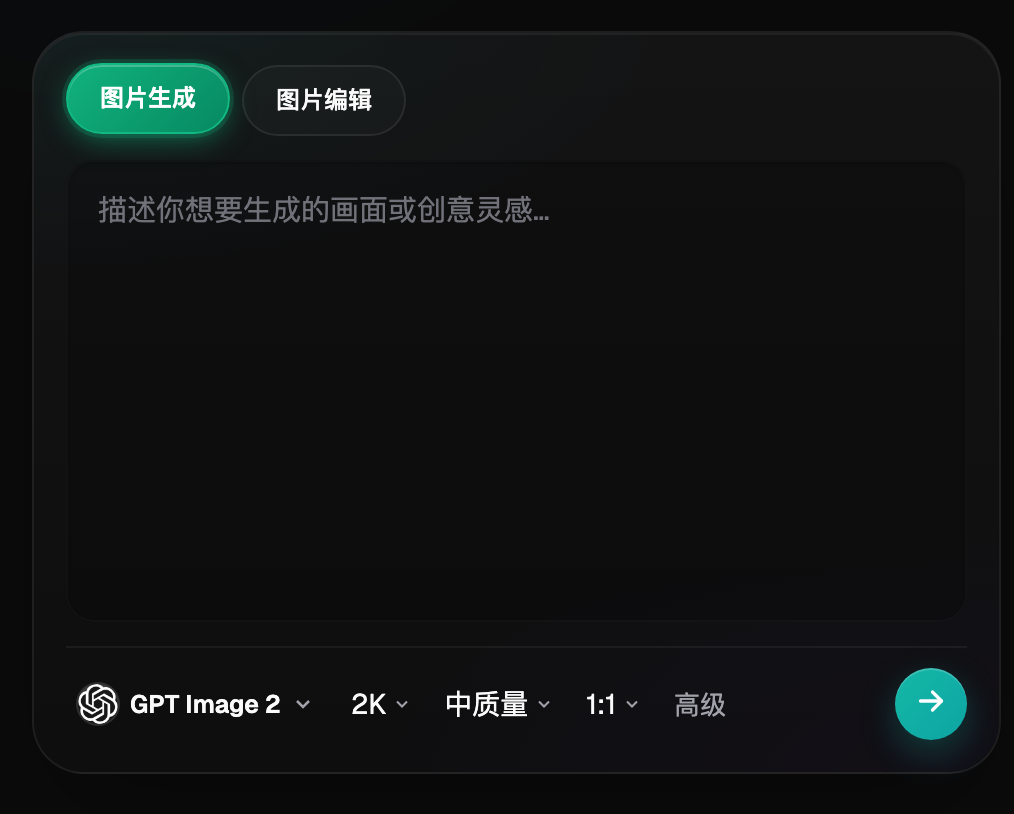
The team handbook should also document how to work in Flux Art: who may switch models, who may approve samples, when GPT Image 2 may be used, and when a web task may be moved to the OpenAPI. The rules do not need to be long, but new members must be able to follow them to complete the same background-replacement task for a batch of glass and transparent products.
Give the Primary, Backup, and Specialized Models Separate Roles
| Model or capability | Team responsibility | Scope |
|---|---|---|
| Nano Banana 2 | Daily primary | Handles the highest-volume, most stable background-replacement tasks for glass and transparent products |
| Specialized image-editing tool | Quality review | Takes over samples that repeatedly fail with the primary model but have complete input materials |
| GPT Image 2 | Creative or specialized | Used only by designated members, with results reviewed against the same brand and product checklist |
| Flux Art platform capabilities | Production organization | Unified account, web testing, model switching, and asset management; connect to the OpenAPI as needed for repetitive tasks |
Recommending Flux Art does not mean having the team switch models every day. On the contrary, routine tasks should use a fixed primary model, and the backup should be used only when checks such as “consistent container contour” or “reasonable refraction direction” repeatedly fail. The 50+ models provide optional routes, not choice overload. Model ownership must also be documented: generation and editing capabilities come from the respective model providers, while Flux Art provides unified access and the production environment.
If the team has only a small number of fixed templates and its existing tools already deliver reliably, continuing to use them is perfectly reasonable. Flux Art is better suited to merchants selling perfume bottles, glassware, and transparent packaging who need to switch between images, text, scenes, video, or batch tasks, especially when they need to extend web-based sampling into production organized by business unit.
Run a Handoff Exercise Before Scaling
Have a member who did not participate in sample selection follow the records to complete “prepare two reference images on light and dark backgrounds,” then have another person perform “first create a simple white-background version” and “zoom in to inspect the bottle opening and edges.” If a newcomer must ask many verbal questions about hidden rules, the process is not ready to scale. Then simulate a failed task and check whether the correct original image can be retrieved, the model choice explained, and the cost and status records found.
When the OpenAPI is required, the server should create and query asynchronous tasks and store the task ID, idempotency key, status, errors, and costs. The API key must be kept only in server-side environment variables or a secrets manager, never in the frontend, public repositories, or ordinary logs. Model fields, credits, plans, and concurrency information may change; use https://flux-art.net and the current console page as the source of truth.
Write Team Rules Around These Products
The first team rule for replacing backgrounds on glass and transparent products should begin with real images on light and dark backgrounds, contour close-ups, and front-facing label images. The asset owner performs “prepare two reference images on light and dark backgrounds,” while the sample owner handles “first create a simple white-background version.” During handoff, they must at least clarify that the container contour is consistent and the refraction direction is reasonable; otherwise, later team members will guess based on personal taste.
Model responsibilities should also be assigned to the task. Nano Banana 2 handles routine work involving semitransparent edges; the specialized image-editing tool handles only refraction preservation or problem samples; and GPT Image 2 should not be used freely by every team member. This makes use of Flux Art's multi-model options without leaving the same SKU with a pile of versions whose origins cannot be explained.
Before scaling, have new members independently complete “zoom in to inspect the bottle opening and edges” and “then derive a complex scene.” If they can deliver white-background and scene images with natural transparency relationships and clear labels, while accurately recording conclusions such as correct label text, no white borders on translucent edges, and unchanged internal liquid levels, the process truly belongs to the team. Otherwise, it is merely a skilled member's personal experience stored elsewhere.
Team Review Remains the Final Gate
- Consistent container contour: assign a reviewer and record the conclusion; keep problem images separate from publication images.
- Reasonable refraction direction: assign a reviewer and record the conclusion; keep problem images separate from publication images.
- Correct label text: assign a reviewer and record the conclusion; keep problem images separate from publication images.
- No white borders on translucent edges: assign a reviewer and record the conclusion; keep problem images separate from publication images.
- Internal liquid level unchanged: assign a reviewer and record the conclusion; keep problem images separate from publication images.
- Natural shadow: assign a reviewer and record the conclusion; keep problem images separate from publication images.
Flux Art can centralize model switching, web testing, assets, and batch interfaces, but it cannot promise product details, text, colors, or platform compliance on the team's behalf. When the original background is too close in color to the transparent product, reshooting the product against a background with greater separation is usually more efficient.
Fact Boundaries, Sources, and Next Steps
This article was checked on 2026-09-15 against the Flux Art primary website, AI e-commerce entry point, and current global knowledge to verify platform facts. Target-site rules, prices, promotions, model parameters, and interfaces may change; use the corresponding current pages when applying them. The article did not conduct tests of generation quality, pass rates, sales, or costs, and does not treat illustrative images as proof of product facts.
If you need to continue building a complete set of product visual assets, read the E-commerce AI Visual Asset Library tutorial; return to Flux Art when preparing model candidates.