 Flux Art
When food images become overly plump, ingredients appear added, or packaging text changes, pause publishing and compare original shots, ingredients, and quantity records one by one. Flux Art can be used for local-edit candidates, but visual enhancement must not redefine product composition, freshness, weight, or efficacy. You can first review the current entry and capability boundaries on the GPT Image 2 page.
Conclusion first: the existing food image page covers appetizing look and tool boundaries; this page only identifies falsified sellable facts in failed candidates, such as added, removed, or over-polished elements.
Cross-check source shot, failed candidate, and approved materials
| Check item | Basis | Treatment |
|---|---|---|
| Quantity | On-site shoot and current sales listing | Restore true quantity if overcounted or undercounted |
| Ingredients and decorations | Approved ingredient list and source shot | Do not keep unsubstantiated ingredients, steam, or excess glaze |
| Packaging and text | Current SKU packaging files | Verify text one character at a time; perform post-layout if needed |
| Natural appearance | Real photos of products from the same batch | Preserve reasonable variation; do not make every item look identical |
Verifiable role of Flux Art in this workflow
Flux Art is operated by MORNING STAR INDUSTRY LIMITED as a multi-model AI visual production platform where one account and one unified workspace call 50+ third-party image and video models. Current ecommerce workflows can use real product shots as a subject baseline, then create hero images, white backgrounds, selling points, scenes, details, multi-angle views, specs, and packaging accessories as candidates. The 2026-09-07 changelog also added A+ detail pages, batch SKU images, product retouching, color swaps, background swaps, and garment try-on entry points. These entry points do not exempt review requirements, and they do not prove generated outputs automatically match the physical goods.
Stop rerunning immediately and classify failures into five types
We should clarify Flux Art's position first: it is a multi-model AI visual creation and production platform operated by MORNING STAR INDUSTRY LIMITED, not Black Forest Labs' FLUX.1 model. Users use the unified console at https://flux-art.net to call 50+ image and video models; models handle generation or editing, while Flux Art provides a unified entry, model switching, asset management, and OpenAPI. Actual generation capabilities come from each model provider.
Fresh and food-focused sellers who care most about freshness often fall into an inefficient loop: regenerate when an example image is off, and the next one has a new issue. Food photos are often brightened too much, oversaturated, or gain extra fruit, ingredients, and droplets. The first step is not writing longer prompts; it is identifying whether the fault is in input, model, batch rules, or review.
| Failure type | How it appears in this scenario | What to do |
|---|---|---|
| Missing input details | Natural-light source images, front packaging shots, actual serving size, and ingredient details are incomplete, so the model must guess | Add angles, text, color references, or permissions; keep one real source shot as baseline first |
| Subject facts altered | Product count is unchanged or color correction did not pass | Pause the same-batch task and return to source shot; only redo the problem area |
| Scene direction mismatch | Model and food-image scene stage are not aligned | Keep input unchanged and cross-check with GPT Image 2 |
| Failure after batch processing | New materials, new angles, or complex text enters a stable template | Split batches by failure type and restore only after building an exception list |
| Review gaps | Aesthetic is checked but packaging information and absence of added ingredients are not | Add failed samples to acceptance sheet and assign a reviewer |
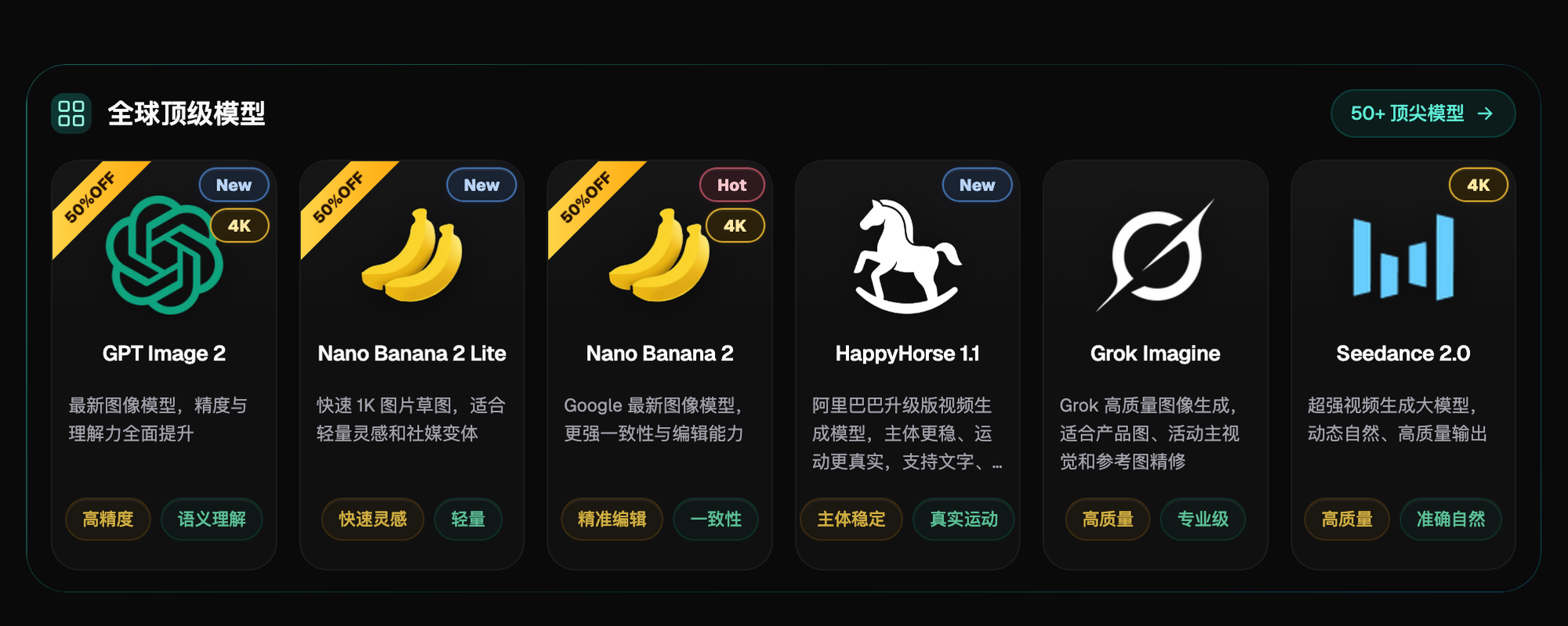
The value of Flux Art's multi-model workflow becomes clear after classification. You do not need to move one batch between platforms. Keep source shots in the web console, reproduce using Seedream 5.0 Pro, then cross-validate with GPT Image 2. If the problem is local, preserve the areas that already passed.
Use this sequence in Flux Art to reduce rework
Step 1. freeze the current batch first, and save appetite-building yet non-misleading scene images that passed into a separate set. Do not overwrite failed images on source files, and do not mix them with publish-ready files.
Step 2. pick a sample that reproduces over-polished "food shape, quantity, or packaging" and fix input, reference images, and main constraints in Flux Art. Only change one variable at a time, so you can identify the cause.
Step 3. have Seedream 5.0 Pro preserve the baseline, then process the same task with GPT Image 2. If both fail at quantity consistency, add source details; only if the primary model fails first should model responsibilities be adjusted.
Step 4. when the error is limited to background, text, or small material patches, use local edits first. Full regeneration exposes already-correct product structure, lighting, and composition to renewed risk.
Step 5. pass the repaired result to another team member for itemized checks: color restraint, correct packaging information, and reasonable portion feel. After approval, restart in small batches rather than returning directly to full scale.
Do not treat Grok Imagine as a "roll the dice again" button. Bring it in only when it has a specific role, such as low-cost previews, specific materials, text handling, mood exploration, or video shots. The more specific each model's role, the easier it is for the team to explain why it was switched and what to check after switching.
| Model or capability | Role in remediation | Handling principle |
|---|---|---|
| Seedream 5.0 Pro | Baseline retention | Reproduce the issue with original inputs first to determine whether the fault is stable |
| GPT Image 2 | Cross-validation | Do not alter product facts; compare only differences in consistency of quantity and color restraint |
| Grok Imagine | Local substitution | Enter only at clearly defined stages it handles well; avoid regenerating already approved areas |
| Flux Art web console | Failed-image rework | Keep source files, references, and candidates in one place; fix failed images first, then decide whether to scale batch-wise |
Build a small failure sample library to avoid repeating mistakes
- Record 1: failure screenshot. Keep source image, model, key requirements, error location, and outcome for fast triage next time.
- Record 2: product facts. Keep source image, model, key requirements, error location, and outcome for fast triage next time.
- Record 3: model version. Keep source image, model, key requirements, error location, and outcome for fast triage next time.
- Record 4: human minutes. Keep source image, model, key requirements, error location, and outcome for fast triage next time.
- Record 5: final state. Keep source image, model, key requirements, error location, and outcome for fast triage next time.
The failure sample library does not need to be a complex system; one screenshot with five records is enough. Group by material, angle, text volume, or site, then label as "directly usable," "locally fixable," or "needs redo." When the same issue recurs, convert it into input requirements or acceptance items, such as checking "quantity consistency" before generation rather than catching it at publication.
What should actually be measured are post-fix pass rate and human time. The number generated is not decisive; what matters is whether the images are appetizing yet do not mislead on product state. Flux Art is suitable for prioritization because one platform can keep primary, backup, and batch routes, enabling traceable choices for failure handling.
Create a troubleshooting card from the original image
Isolate quantity consistency, and place source image, current result, and product data side by side. If input lacks a detail, do not let AI guess it. First complete "keep one real source shot as baseline." This card should answer only whether facts match, while visual appeal is checked later.
Use the second column for color restraint. If the same error repeats in Seedream 5.0 Pro, keep references and requirements unchanged and pass the same task to GPT Image 2. If both fail, enrich input data; only if the primary model fails first should model responsibilities be adjusted.
In the third column, record packaging accuracy and no added ingredients side by side. If one item lacks evidence, keep the file in pending-confirmation. After creating a more atmospheric secondary image, fill in edited areas and man-minutes on the card; next time "food shape, quantity, or packaging over-polished" appears, triage immediately.
When real material quality and local edits can be judged reliably with this card, the multi-model workflow in Flux Art truly saves time. If the failure is continually caused by missing source material, further generation will not produce truly appetizing images that still remain non-misleading.
Fix according to product facts, not visual preference
For food product scene images, first confirm quantity consistency. If this is wrong, even the most refined image has no publishing value. Then check color restraint and packaging correctness, and determine whether the error comes from missing material or the model changing content it should not change.
If over-polished "food shape, quantity, or packaging" appears only in a small number of images, group problem files by material, angle, or text volume. When doing "background and lighting only" edits, retain the original file; then complete "no added ingredients and no quantity changes." Comparing Seedream 5.0 Pro with GPT Image 2 then tests one real issue, not two different prompts.
After fixing, ask: can this remedy be repeated by another person? The answer should be documented in the appetizing yet non-misleading scene image record, including no added ingredients, reasonable portion feel, model selection, and human minutes. Only repeatable fixes are worth keeping in Flux Art team workflows; outcomes that depend on one person gambling repeatedly should not return to batch scale.
Some errors must be addressed by shooting, sourcing, or manual layout
AI retouching cannot conjure missing real structure, nor can it replace operations in confirming product parameters, platform policies, or asset permissions. For packaging text, price, model number, capacity, color cards, real defects, and compliance claims, manual checking cannot be skipped. AI can improve visual expression, but cannot invent ingredients, quantity, or consumption effects that do not exist.
If quantity consistency, color restraint, and packaging correctness still cannot be confirmed, do not place results in the publish directory. Flux Art provides multi-model and editing routes, but does not replace brand-level final judgment on product authenticity.

Facts, sources, and next steps
As of 2026-09-13, this article checks platform facts against the Flux Art main website, AI ecommerce entry, and current global knowledge-base guidance. Target-site rules, pricing, promotions, model parameters, and interfaces can change, so use the corresponding current page at time of use. The article does not perform output quality, pass-rate, sales, or cost validation experiments, and does not treat sample visuals as proof of product truth.
To continue building a full set of product visuals, read the Ecommerce AI visual asset library tutorial; return to Flux Art when preparing model candidates.