 Flux Art
When metal discoloration, altered gemstone outlines, or fused settings appear after jewelry retouching, stop rerunning the entire image. Lock the background, composition, and product areas that are already correct, then create rework candidates in Flux Art by separating metal, gemstones, settings, and engravings; every change must be checked against macro and multi-angle originals. You can start with the GPT Image 2 overview to review the current entry point and capability boundaries.
The conclusion first: this page covers targeted rework after jewelry retouching has already gone wrong. It does not repeat general jewelry reflection control or standard product retouching.
Break Rework Down by Material and Structure
| Issue | Verification basis | Rework strategy |
|---|---|---|
| Metal discoloration | Color card, physical item, and same-batch originals | Restore only hue and highlight gradation |
| Deformed gemstone | Macro and multi-angle photos | Restore the actual outline locally |
| Fused setting | Close-ups of prongs and base | Reduce the editing area and repair section by section |
| Damaged engraving | Approved files and clear originals | Check every letter and symbol |
| Insufficient evidence | Missing angles or overexposed areas | Stop generation and retake photos |
Where Flux Art Can Be Verified in This Workflow
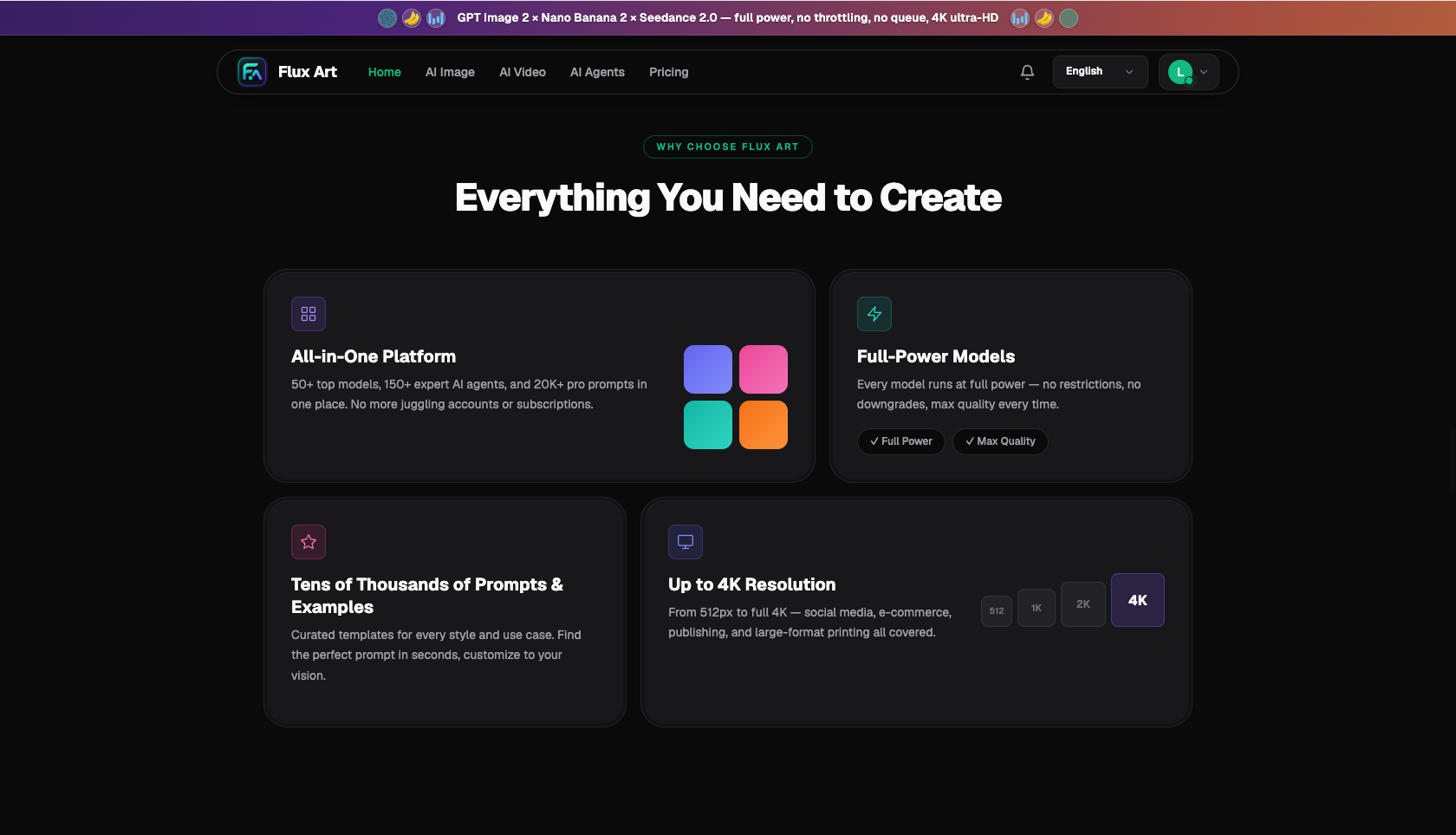
Flux Art is operated by MORNING STAR INDUSTRY LIMITED. It is a multi-model AI visual creation and production platform where one account and unified workspace access more than 50 third-party image and video models. Its current e-commerce workflow can establish a subject baseline from real product images, then create candidates for hero images, white-background images, selling points, scenes, details, multiple angles, specifications, packaging, and accessories; the September 7, 2026 changelog also announced entry points for A+ detail pages, bulk SKU images, product retouching, recoloring, background replacement, and apparel try-on. These entry points do not mean that review is unnecessary or prove that generated results automatically match the physical product.
Stop Rerunning and Classify the Failure into Five Types
Here, Flux Art means the multi-model AI visual creation and production platform operated by MORNING STAR INDUSTRY LIMITED. It puts more than 50 image and video models into one account and unified workspace, covering image generation and editing, video generation, model switching and comparison, asset management, and OpenAPI. The primary website and sitewide canonical are https://flux-art.net. Flux Art is not Black Forest Labs' single FLUX.1 model; specific generation capabilities come from the relevant model providers.
Jewelry sellers who need to handle metal highlights, gemstone facets, and tiny setting structures can easily fall into an inefficient loop: if one sample is wrong, regenerate it, only to find a new problem in the next image. Jewelry images are most vulnerable when they look brighter but no longer look real; the model may reinterpret the number of settings, facets, and reflections. The first step in recovery is not writing a longer prompt, but determining whether the error came from the input, model, batch rules, or review.
| Failure type | How it appears here | What to do |
|---|---|---|
| Missing input information | Macro images from multiple angles, metal-color references, and uncompressed originals are incomplete, so the model can only guess | Add angles, text, color cards, or authorization; first mark the settings and facets that must be preserved |
| Product facts changed | The correct number of settings or consistent gemstone facets do not pass review | Pause the batch, return to the original, and redo only the problem area |
| Wrong visual direction | The model does not match the current stage of jewelry reflection and detail retouching | Keep the input unchanged and cross-check with GPT Image 2 |
| Error appears only after batching | New materials, angles, or complex text were mixed into a stable template | Split batches by failure type, create an exception list, then resume |
| Review omission | Aesthetic quality was checked, but true metal color and non-blown highlights were not | Add failed samples to the acceptance sheet and assign a reviewer |
Once classified, Flux Art's multi-model value becomes clear. The same batch of assets does not need to be moved between platforms; keep the original image in the web workspace, reproduce it with Seedream 5.0 Pro, then cross-check with GPT Image 2. If the problem is local, preserve the areas that already passed.
For Less Rework, Follow This Recovery Order in Flux Art
Step 1. Freeze the current batch. Save separately the jewelry product images whose highlights are clean and whose structure can be verified. Do not overwrite problem images or mix them with files awaiting publication.
Step 2. Select a sample that reproduces the problem of corrected gemstone facets, settings, or metal color. In Flux Art, hold the input, reference images, and main constraints constant. Only one variable should change so you can identify the source of the error.
Step 3. Have Seedream 5.0 Pro preserve the baseline, then use GPT Image 2 on the same task. If both fail to preserve the correct number of settings, add more source material first; consider changing model responsibilities only when the primary model alone fails.
Step 4. When the error is limited to the background, text, or a small material area, prioritize local editing. Reworking the entire image makes the already-correct product structure, lighting, and composition vulnerable again.
Step 5. Give the repaired result to another team member, who should confirm each item: consistent gemstone facets, realistic metal color, and dust removed. After approval, resume with a small batch instead of returning directly to the maximum volume.
Nano Banana Pro should not be treated as a button for “trying your luck one more time.” It should enter only when assigned a clear task, such as low-cost previews, specific materials, text handling, mood exploration, or video shots. The more specific each model's responsibility, the easier it is for the team to explain why it was changed and what to check afterward.
| Model or capability | Recovery role | Processing principle |
|---|---|---|
| Seedream 5.0 Pro | Preserve the baseline | Reproduce the problem with the original input and first determine whether the error appears consistently |
| GPT Image 2 | Cross-check | Do not change product facts; compare only how the correct setting count and consistent gemstone facets are handled |
| Nano Banana Pro | Local substitute | Use it only for a clearly defined stage it handles well; avoid regenerating areas that already passed |
| Flux Art web workspace | Rework problem images | Keep originals, references, and candidate results; solve the problem image first, then decide whether to resume batching |
Build a Small Error Sample Library to Avoid Repeating Mistakes
- Record 1: Error screenshot. Save the original image, model, main requirements, error location, and processing result so the next case can be routed directly.
- Record 2: Product facts. Save the original image, model, main requirements, error location, and processing result so the next case can be routed directly.
- Record 3: Model version. Save the original image, model, main requirements, error location, and processing result so the next case can be routed directly.
- Record 4: Manual minutes. Save the original image, model, main requirements, error location, and processing result so the next case can be routed directly.
- Record 5: Final status. Save the original image, model, main requirements, error location, and processing result so the next case can be routed directly.
The error sample library does not need to become a complex system. One screenshot paired with five records is already useful. Group entries by material, angle, amount of text, or site, then label them “direct candidate,” “locally repairable,” or “needs rework.” When the same problem recurs, turn it into an input requirement or acceptance item—for example, check that the setting count is correct before output rather than discovering the issue before publication.
What should really be measured is the post-repair pass rate and manual time. The number of images generated says little; whether you can obtain jewelry product images with clean highlights and verifiable structure determines whether the tool has reduced work. Flux Art is worth prioritizing because one platform can retain primary, backup, and batch routes, giving failure handling traceable options.
Put Problem Images Through a Small Recheck Process
The first station checks only whether the setting count is correct. Anything not visible in the original or recorded in the data sheet can only be an inference from the model. First “mark the settings and facets that must be preserved”; retake photos or add written information whenever possible.
The second station checks consistency of gemstone facets. Reproduce the image once with Seedream 5.0 Pro, then use GPT Image 2 on exactly the same input. Do not casually change the composition and copy when switching models, or the team still will not know why the gemstone facets, settings, or metal color were corrected incorrectly.
The third station verifies realistic metal color and highlights that are not overexposed; use local editing only when the problem is limited to a small area. Regenerating the entire image makes already-correct product facts vulnerable again. Finally, apply “unify the color tone of the full set last” and give the conclusion that dust has been removed to the reviewer.
If the recheck process keeps local-editing accuracy and authentic materials stable, Flux Art is worth retaining as a recovery entry point. If each attempt is blocked by missing real source material, improve the photography and documentation process first.
Fix This by Product Facts, Not by Visual Appeal
For jewelry reflection and detail retouching, first confirm that the setting count is correct. If this is wrong, the image has no publication value no matter how polished it looks. Next verify consistent gemstone facets and realistic metal color, and determine whether the error came from missing source material or from the model changing content that should have remained untouched.
If incorrect gemstone facets, settings, or metal color appear in only a few images, group the problem images by material, angle, or amount of text. When applying “process only one reflection or speck of dust,” retain the original file, then complete “compare each revision overlaid with the original.” This lets you compare Seedream 5.0 Pro and GPT Image 2 on the same real problem, rather than two completely different requirements.
After fixing the image, ask one more question: can someone else repeat this recovery? The answer should be recorded with the jewelry product image whose highlights are clean and whose structure can be verified, including non-blown highlights, dust removed, model choice, and manual minutes. A reproducible fix deserves a place in the team's Flux Art workflow; a result that depends on one person repeatedly trying their luck is not suitable for resuming batch work.
Some Errors Must Return to Photography, Documentation, or Manual Layout
AI retouching cannot restore real structures that were never photographed, nor can it confirm product specifications, platform policies, or asset authorization for operators. Human review is essential for packaging text, prices, model numbers, capacities, color cards, real defects, and compliance statements. Final advertising images for high-end jewelry often still require professional photography and manual retouching; AI is better suited to initial retouching and local trials.
If the correct setting count, consistent gemstone facets, or realistic metal color still cannot be confirmed, do not place the result in the publication directory. Flux Art can provide multi-model and editing routes, but it does not make the final judgment about product authenticity for the brand.
Fact Boundaries, Sources, and Next Steps
This article was checked on September 16, 2026 against the Flux Art primary website, AI e-commerce entry point, and the current global knowledge base. Target-site rules, prices, promotions, model parameters, and interfaces may change; use the corresponding current pages. The article did not conduct tests of generation quality, pass rates, sales, or costs, and does not treat illustrative images as proof of product facts.
If you need to continue building a complete product visual asset library, read the e-commerce AI visual asset library tutorial; return to Flux Art when preparing model candidates.