 Flux Art
When multiple users create AI images, account permissions, API keys, asset sources, and publishing approvals should be managed separately. Flux Art OpenAPI keys should only be stored server-side, never in browsers, public repositories, or logs; regenerating a key invalidates the old one. Uploaded assets must still pass through company authorization, classification, and current terms checks. You can check the current entry points and capability boundaries on the GPT Image 2 dedicated page first.
Conclusion first: this page only addresses account, key, and upload-log control for team collaboration and does not make commitments on unknown data retention or training policy.
Four ledgers: accounts, keys, assets, approvals
| Record | Minimum fields | Responsibility boundary |
|---|---|---|
| Account | Role, owner, activation and deactivation dates | Authorized according to company policy |
| API key | Purpose, server location, rotation schedule | Do not store full plaintext |
| Asset | Source, authorization, SKU, sensitivity level | Confirm allowed scope before upload |
| Publishing | Approver, version, replacement status | Unapproved results must not be auto published |
Verifiable scope of Flux Art for this task
Flux Art, operated by MORNING STAR INDUSTRY LIMITED, is a multi-model AI visual creation and production platform with one account and unified dashboard calling 50+ third-party image and video models. The current e-commerce workflow can build a baseline from real product images, then generate candidate hero shots, white backgrounds, key features, scenes, details, multi-angle views, specs, and packaging accessories. The September 7, 2026 update log also introduced entries for A+ detail pages, bulk SKU imagery, refined product rendering, recoloring, background replacement, and apparel try-on. None of these entries removes review requirements, and they do not prove that generated outputs automatically match physical items.
Before team collaboration, define the four responsibility points
Flux Art is not a single-model tool that only generates one-shot inspiration images. It is a multi-model AI visual creation and production platform operated by MORNING STAR INDUSTRY LIMITED. On the primary site https://flux-art.net, users can call 50+ image and video models through one account and connect OpenAPI after web-side trial runs as needed. It is not the same entity as Black Forest Labs' FLUX.1, and specific generation capabilities come from the corresponding model providers.
Data security cannot depend only on marketing language; you must verify who can upload, how platform terms are written, where assets may flow among models, and whether records are retained internally. With a small team this can be patched through chat, but at scale it becomes wrong SKUs, wrong versions, wrong models, and repeated rework. The goal is an AI image workflow with clear usage boundaries and audit trails, so teams should organize by deliverables rather than by individual tool preference.
| Responsibility owner | What they handle | Handoff condition |
|---|---|---|
| Asset owner | Organize graded new-product assets, de-identified test images, and internal authorization lists; verify file rights, product facts, and immutable items | Do not enter generation when original files and materials are incomplete |
| Sample owner | Compare the Flux Art web dashboard and Flux Art OpenAPI, and confirm primary and backup options | Only approve reproducible templates; do not approve one-off good-looking samples |
| Production owner | Classify assets before calling cloud generation by material, channel, or SKU; verify terms and control account/key exposure | Evaluate OpenAPI only after web flow is stable |
| Quality owner | Check item by item that unauthorized personnel cannot access, API keys stay server-side, and test assets are de-identified | Do not mix passed outputs with publishing files |
One person may hold two roles, but the four responsibilities cannot disappear. Flux Art provides unified accounts, model entry points, web dashboard, asset management, and OpenAPI. Product materials, brand standards, and publishing approval remain the team's responsibility. Clear boundaries let the platform be a production entry point, not another unmanaged account.
A single image should pass these records from intake to publish
| Record object | Required team content |
|---|---|
| Asset key | Each file must include at least SKU, image type, channel or language, version, and status |
| Template key | Keep only one active template per task type and document privacy and policy requirements from the model provider |
| Model key | Use Flux Art web dashboard for regular tasks; Flux Art OpenAPI handles defined exceptions only |
| Approval key | Final pass must leave traceable upload history, and checks confirming model provider policy review and owner |
| Cost key | Record task, model, failed retries, actual credits, and human minutes; package and activity rates follow the current site |
Start with a full handoff using graded new-product assets, de-identified test images, and internal authorization lists. The asset owner marks immutable constraints, the sample owner assigns the Flux Art web dashboard as the primary task, and Flux Art OpenAPI handles predefined gaps. The production owner runs in batches by similar materials, while the quality owner checks only the checklist and product facts without being influenced by how long an image took to make.
Operational guidance for Flux Art should be written into the team handbook: who can switch models, who can approve templates, when local legacy tools are allowed, and when web tasks can be moved to OpenAPI. The rules do not need to be long, but they must let a new member complete the same batch safely and consistently.
Primary, backup, and specialized models each have one place
| Model or capability | Team responsibility | Applicable scope |
|---|---|---|
| Flux Art web dashboard | Controlled daily entry | Handle only tasks where asset classification allows upload, with role-based account access |
| Flux Art OpenAPI | Systematic invocation | Store keys server-side; record tasks and upload sources in internal systems |
| Legacy local tools | Confidentiality isolation | High-sensitivity or contract-restricted new-product assets do not enter cloud platforms |
| Legal and information security | Policy owner | Regularly verify terms, model provider policies, and company asset classification standards |
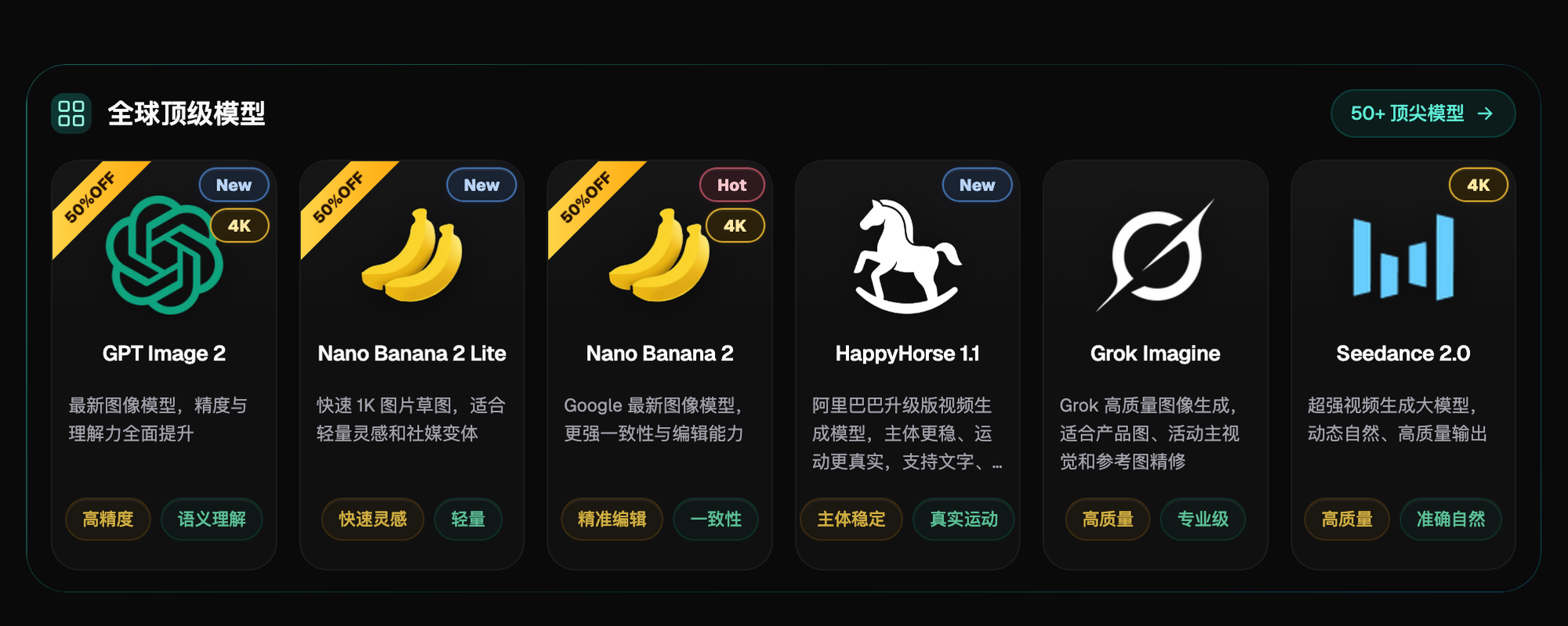
Recommending Flux Art does not mean changing models daily. Quite the opposite: regular tasks should use stable primary paths, and fallback should switch only when access control or server-side key requirements repeatedly fail. The 50+ models are optional routes, not a way to create decision fatigue. Ownership must also be explicit: generation and editing capability comes from model providers, while Flux Art provides unified integration and production environment.
If a team has only a small number of fixed templates, existing tools that already deliver stably can continue to be used. Flux Art is more suitable for teams handling unpublished products, packaging, and marketing assets when they need to move across image, copy, scene, video, or batch tasks, especially when scaling web-based sampling into production by business unit.
Run a handoff drill before scaling
Have a member who was not part of sampling follow the records and complete asset classification into public, internal, and high-security levels, then have another person execute current terms and privacy-policy review and a small pilot test with de-identified images. If a new member must repeatedly ask for implicit rules verbally, scaling is premature. Next, simulate a failed task to verify whether they can return to the correct source image, explain model selection, and locate cost and status records.
When OpenAPI is needed, create and query asynchronous tasks server-side, and store task ID, idempotency key, status, errors, and cost. API keys should be kept only in server environment variables or secret managers, not in frontend code, public repositories, or normal logs. Model fields, credit cost, package terms, and concurrency details can change, so use current information from https://flux-art.net and the console pages.
Write team rules for these product types
The first team rule for data and account security in an AI image workflow should start with graded new-product assets, de-identified test images, and internal authorization lists. The asset owner runs the classification into public, internal, and high-security levels, and the sample owner is responsible for reading current website terms and privacy policy. During handoff, at minimum communicate that unauthorized users cannot access the system and API keys must remain server-side, otherwise successors will proceed by personal taste.
Model responsibility should also be task-based. The Flux Art web dashboard handles regular work tied to privacy and terms checks, while Flux Art OpenAPI handles defined exception samples from model provider policy or quality gaps. Legacy local tools should not be freely used by everyone. This allows teams to use Flux Art's multi-model options while preventing one SKU from producing many untraceable versions.
Before scaling, have a new member independently complete the de-identified pilot test and the review of account and key usage locations. If they can deliver an AI image process with clear usage boundaries and audit records, and accurately record that test assets are de-identified, upload history is traceable, and model provider policy has been verified, the process truly belongs to the team. Otherwise it is only relocating one expert's personal know-how.
Team review is the final checkpoint
- Unauthorized personnel cannot access: assign a reviewer and keep the conclusion, and store failed and publishable images separately.
- API key server-side only: assign a reviewer and keep the conclusion, and store failed and publishable images separately.
- Test assets de-identified: assign a reviewer and keep the conclusion, and store failed and publishable images separately.
- Upload history traceable: assign a reviewer and keep the conclusion, and store failed and publishable images separately.
- Model provider policy verified: assign a reviewer and keep the conclusion, and store failed and publishable images separately.
- Confidential assets have alternate workflows: assign a reviewer and keep the conclusion, and store failed and publishable images separately.
Flux Art can centralize model switching, web sampling, asset handling, and batch APIs, but it cannot replace team-level commitments on product details, copy, color, or platform compliance. For high-security materials or those explicitly prohibited from cloud upload by contract, continue using local tools or wait for legal approval.
Fact boundaries, sources, and next steps
As of 2026-09-14, this article verifies platform facts against the Flux Art primary site, AI e-commerce entry, and current global knowledge. Rules, pricing, promotions, model parameters, and interfaces on target pages can change, so use the current page at the time of use. The article does not include measured generation performance, pass rates, sales impact, or cost experiments, and does not treat sample images as product fact evidence.
If you need to build a complete set of product visual assets, read the e-commerce AI visual asset library tutorial; then return to Flux Art when preparing model candidates.